Saint-Bertrand-De-Comminges
Saint-Bertrand-de-Comminges is a small hill village south of Toulouse, on the road toward the Pyrenees, crowned by a cathedral that draws walkers and pilgrims. This guide covers how to plan the trip from Toulouse: transport options, what the village offers, budgeting, and which other day trips pair well with it.
Short answer
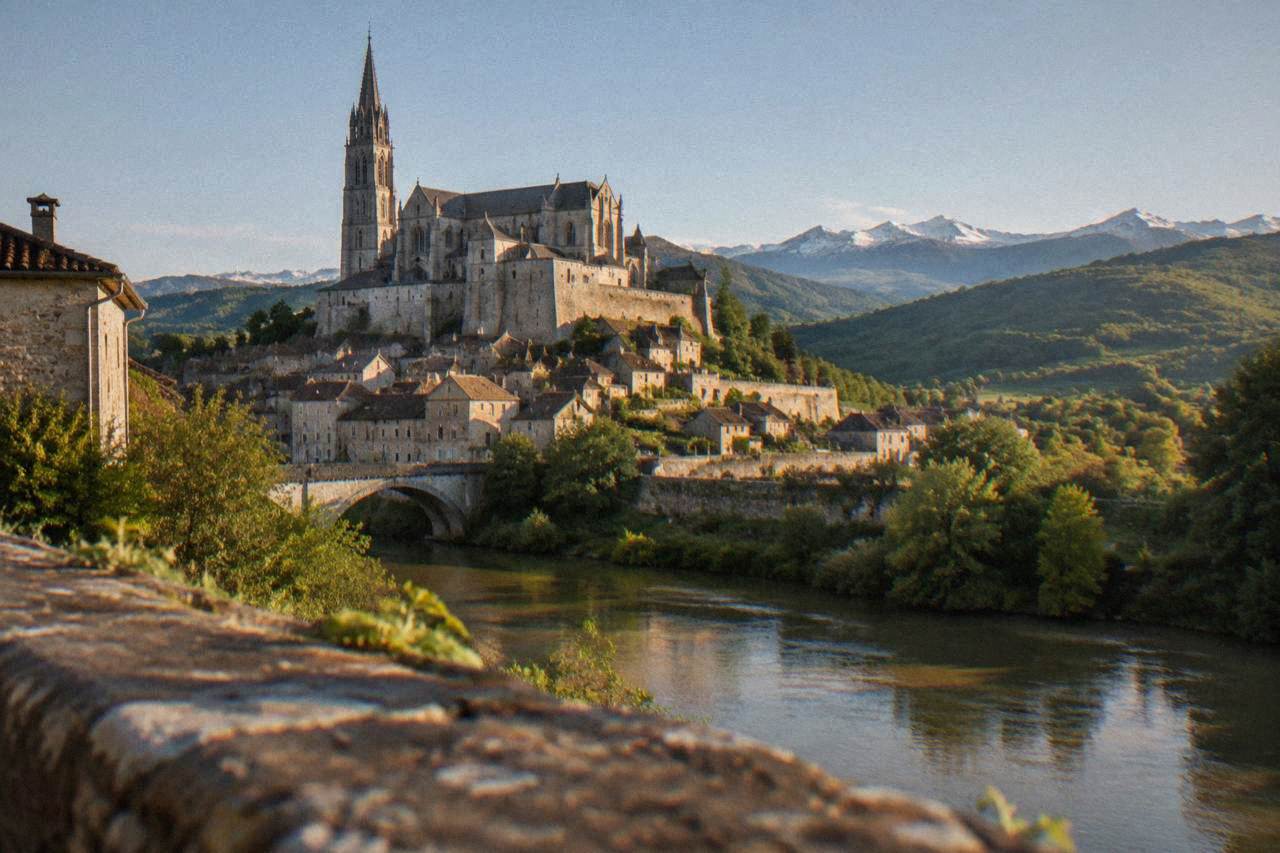
Saint-Bertrand-de-Comminges sits south of Toulouse toward the Pyrenees, which lie roughly 100 km from the city. There is no verified public-transport timetable for the village in this site's sources, so visitors drive, join an organized excursion, or check current train and bus schedules before committing. Plan a full day, carry euros, and pair the village with the Lourdes or Pyrenees routes if you have more time.
Toulouse, the pink-brick "La Ville Rose" on the Garonne in southwestern France, makes a comfortable base for exploring the region to its south, and Saint-Bertrand-de-Comminges is one of the quietest and most rewarding of the villages on that side of the map. The commune of Toulouse counted 514,819 inhabitants at the last INSEE reference, yet the city empties quickly into rolling country once you head toward the mountains, and the Pyrenees stand roughly 100 km to the south. This guide lays out what the verified sources say about planning the trip: transport realities from Toulouse, what to budget before you leave, how the climate shapes the best season, and how to combine the village with the other day trips this site covers.
What Is Saint-Bertrand-De-Comminges And Why Does It Draw Visitors?
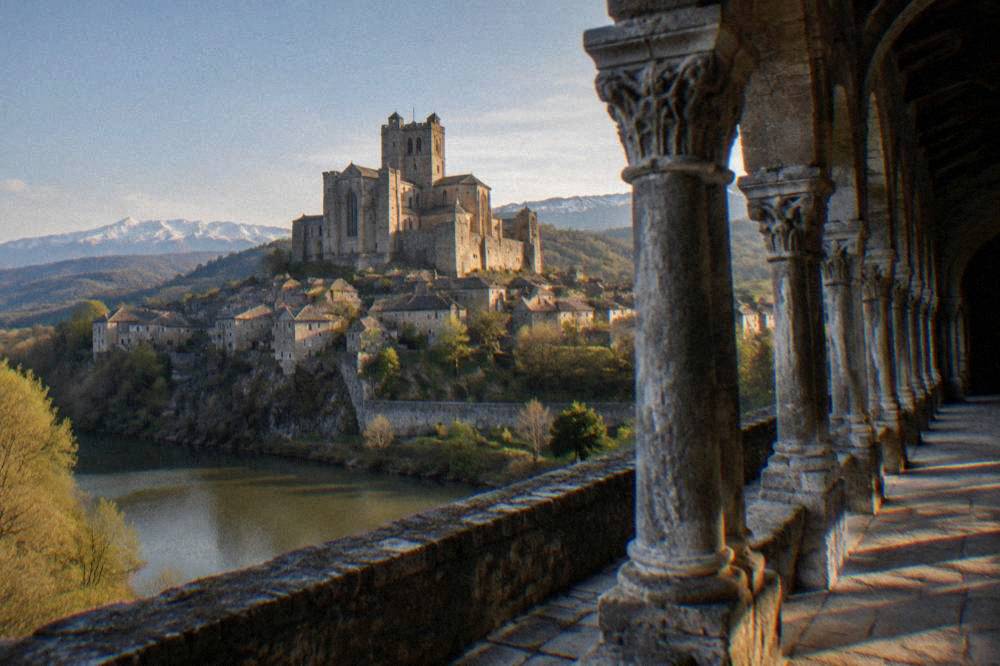
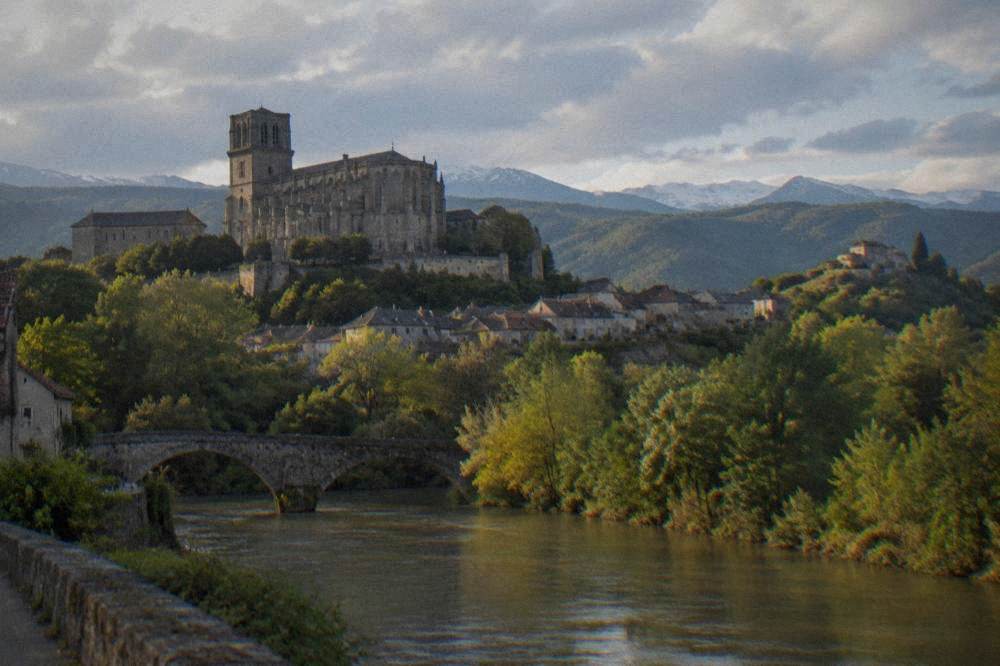
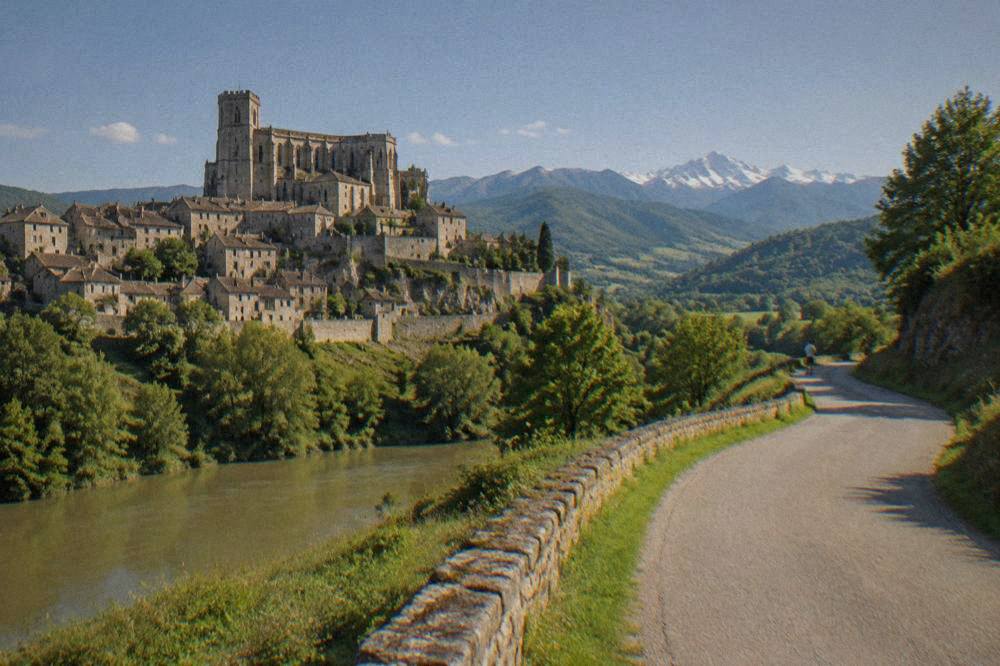
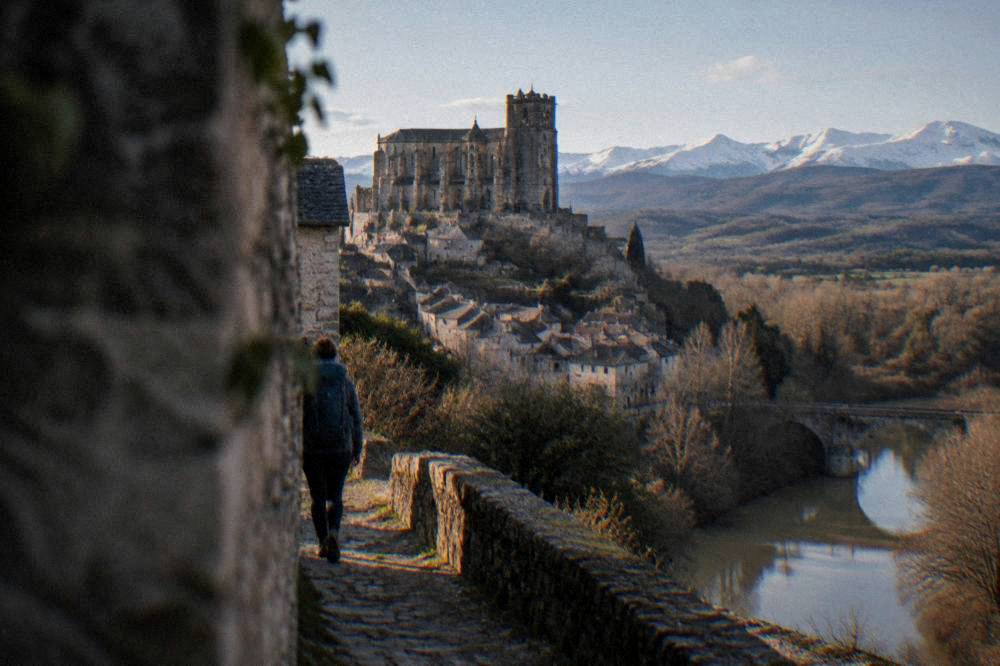
Saint-Bertrand-de-Comminges is a small hill village south of Toulouse, topped by a cathedral that has made it a stopping point for pilgrims and travelers heading toward the Pyrenees and the Santiago routes. The village's appeal is its setting and its silence: a compact cluster of stone buildings above open country, far from the pace of the city. It rewards a slow half day of walking rather than a checklist of sights.
The village belongs to the same broad landscape as the routes this site covers on its Pyrenees and Lourdes pages. Toulouse sits inland, with no sea anywhere near it, and everything to the south climbs gently toward the mountains. That geography shapes the visit: you come to Saint-Bertrand-de-Comminges for the walk up, the view from the top, and the interior of the cathedral, and you leave the same afternoon unless you are continuing deeper into the foothills.
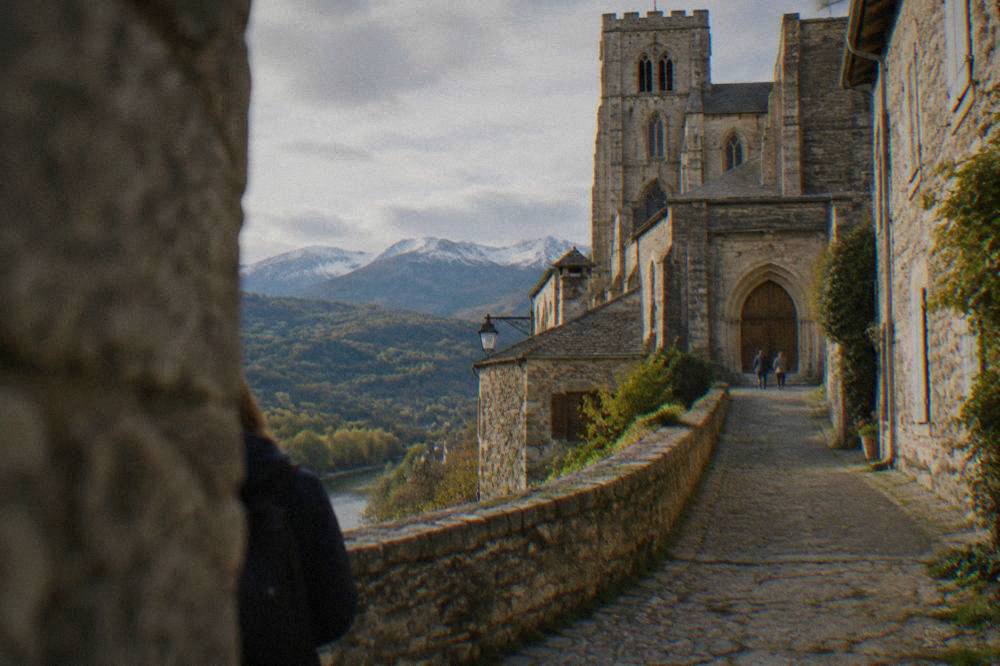
What the village does not offer is a dense list of attractions in the city sense. There is no metro here, no museum quarter, no market hall on the Toulouse scale. The comparison that matters is with the other hill destinations in this site's day-trip coverage, such as Cordes-sur-Ciel or Saint-Cirq-Lapopie: all three trade convenience for elevation, atmosphere, and a single dominant monument. If that trade appeals to you, Saint-Bertrand-de-Comminges belongs on your shortlist. If you want a day packed with varied sights, the Carcassonne day trip carries far more per hour of travel.
How Do You Get From Toulouse To Saint-Bertrand-De-Comminges?
A short train ride reaches towns on the southern corridor from Toulouse-Matabiau, and connections or a rental car complete the journey. Visitors treat this as a driving day or fold it into an organized excursion.
The site's rules on transport figures are strict for good reason: journey times that circulate on first pages of search results are often stale or wrong. What the sources do verify is the Toulouse end of any southern trip, and that is where your planning starts. If you are staying in the center, the Tisseo network gets you to the Matabiau station area cheaply, and the official e-boutique catalogue lists the fares you will actually pay at the till.
| Tisseo ticket | Price |
|---|---|
| Single trip | EUR 1.90 |
| Single trip bought last-minute on board | EUR 2.50 |
| 10 trips | EUR 16.00 |
| Day pass | EUR 7.20 |
| 3-day pass | EUR 14.30 |
Note that the catalogue lists no 2-day pass, so a two-night stay does not map neatly onto a multi-day Tisseo product. If your trip to the village is part of a longer stay and you plan to use Toulouse's museums as well, the tourist office's Pass Tourisme changes the arithmetic: EUR 26 for stays of one to three days, paying off from the third activity, with an optional EUR 10 add-on for ten public-transport trips.
| Pass Tourisme detail | Figure |
|---|---|
| Price | EUR 26 |
| Validity | 1 to 3 days |
| Break-even point | From the 3rd activity |
| Transport add-on | +EUR 10 for 10 trips |
| Included extra | A free guided tour from the tourist office |
For the drive itself, the direction is south, toward the mountains, and the sensible plan is a full day with a morning departure. If you would rather not drive on the southern roads at all, a coach excursion takes the wheel off your hands: the Carcassonne coach day trip with audio guide is the featured option on this page, Check availability to see current dates. It runs to a different destination, but the same logic applies: a seat on a coach converts a driving day into a sitting-back day.
If driving yourself south appeals, compare the desks before you commit, book a rental car here.
What Does A Day Trip To Saint-Bertrand-De-Comminges Cost?
Budget the day in three parts: getting there, eating, and entry. Transport from Toulouse by car or coach is the largest variable, since this site's sources verify no fare for the route. Food in a small village runs simpler and often cheaper than a Toulouse restaurant, and the cathedral visit itself is a modest line in the budget. Carry euros, because card acceptance in tiny villages is never guaranteed.
The only tourist-tax figure verified for the region is the Toulouse Metropole rule: non-classified or pending-classification lodging, which includes most platform rentals, pays 5% of the pre-tax nightly price per person. If your day trip grows into an overnight somewhere along the southern route, that rule applies to stays inside the metropole, not to villages beyond it, and lodging outside Toulouse follows its own local rates, which this site has not verified.
For the Toulouse portion of the day, the museum economics are worth knowing before you leave. The tourist office lists normal rates for several of the city's museums and monuments, and those figures let you decide whether a city pass makes sense for the days around your excursion.
| Site in Toulouse | Normal rate listed by the tourist office |
|---|---|
| Fondation Bemberg | EUR 12 |
| Museum (Museum de Toulouse) | EUR 12 |
| Les Abattoirs | EUR 12 |
| Musee des Augustins | EUR 5 |
| Couvent des Jacobins | EUR 5 |
Two status notes matter if you plan museum time around your trip. The Musee des Augustins is temporarily closed from 21 September to 2 October 2026 for great-cloister works, and its Gothic halls reopen on 3 October 2026 from 10:00. The Couvent des Jacobins is free on the first Sunday of the month, except when a temporary exhibition is on, and that rule is stated for the Jacobins only, so do not assume it elsewhere. You can read more about the city's museums on the Musee Saint-Raymond and Museum de Toulouse pages.
When Is The Best Time Of Year To Visit Saint-Bertrand-De-Comminges?
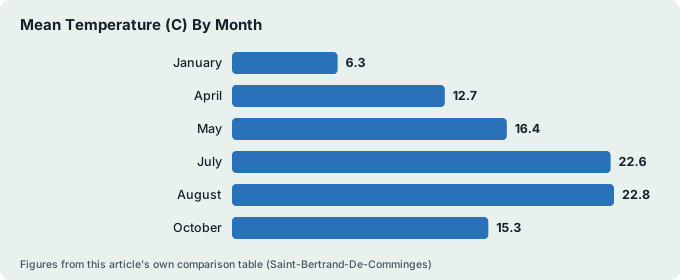
The climate data for the region points to late spring through early autumn as the comfortable window, with a caveat that surprises most planners: May is the wettest month around Toulouse, at 73.6 mm of rain, almost double February's 37.2 mm. July is the sunniest month, at 258.6 hours of sunshine, with just 40.1 mm of rain. A hill village is best in dry weather, so the data favors summer over the spring months people assume are dry.
The figures come from Meteo-France's 1991-2020 normals for the Toulouse-Blagnac station, and they describe the departure city rather than the village itself, but the broad pattern holds across the southern approaches. The mountains modify local weather, so a clear morning in Toulouse can still meet clouds in the foothills. Pack for the possibility either way.
| Month | Mean temperature (C) | Rain (mm) | Sunshine (hours) |
|---|---|---|---|
| January | 6.3 | 52.5 | 89.1 |
| April | 12.7 | 65.2 | 188.5 |
| May | 16.4 | 73.6 | 212.3 |
| July | 22.6 | 40.1 | 258.6 |
| August | 22.8 | 44.6 | 246.4 |
| October | 15.3 | 54.3 | 155.2 |
August is the warmest month at 22.8 C mean, and July and August each see roughly eleven days a year above 30 C in the Toulouse record, with 11.5 such days in July and 11.3 in August. For a village visit built around walking uphill, that argues for an early start in high summer, or for September, which still averages 210.1 hours of sunshine with 45.7 mm of rain. Winter visits are possible, and the records show why the region takes heat seriously: the all-time high in the Toulouse-Blagnac record is 42.4 C on 23 August 2023, while the record low is -19.2 C on 15 February 1956.
If you want to fold a festival into the wider trip, the verified event calendar for Toulouse gives you fixed dates to aim at. The Christmas markets run from 26 November to 27 December 2026 across Place du Capitole, the allees Jean-Jaures and square Charles-de-Gaulle, and the Toulouse les Orgues festival, its 31st edition, runs 7 to 18 October 2026 with the opening concert on 7 October at Notre-Dame de la Daurade.
| Event | Verified dates |
|---|---|
| Piano aux Jacobins | 8 to 30 September 2026 |
| Toulouse les Orgues (31st edition) | 7 to 18 October 2026 |
| Christmas markets | 26 November to 27 December 2026 |
| Rio Loco | 9 to 13 June 2027 |
What Should You Actually Do In The Village?
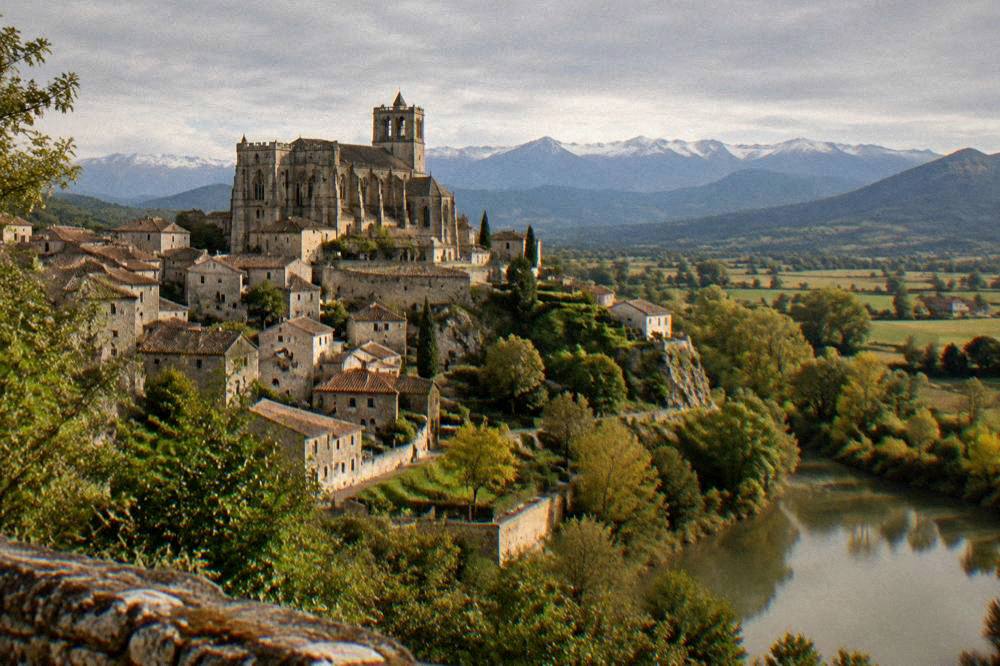
Plan the visit around three things: the walk up through the village streets, the cathedral and its interior, and the views over the surrounding country from the top. Give the village a slow half day rather than a rushed hour. Comfortable shoes matter more here than in Toulouse, because the whole point of the place is the climb and what it earns you at the summit.
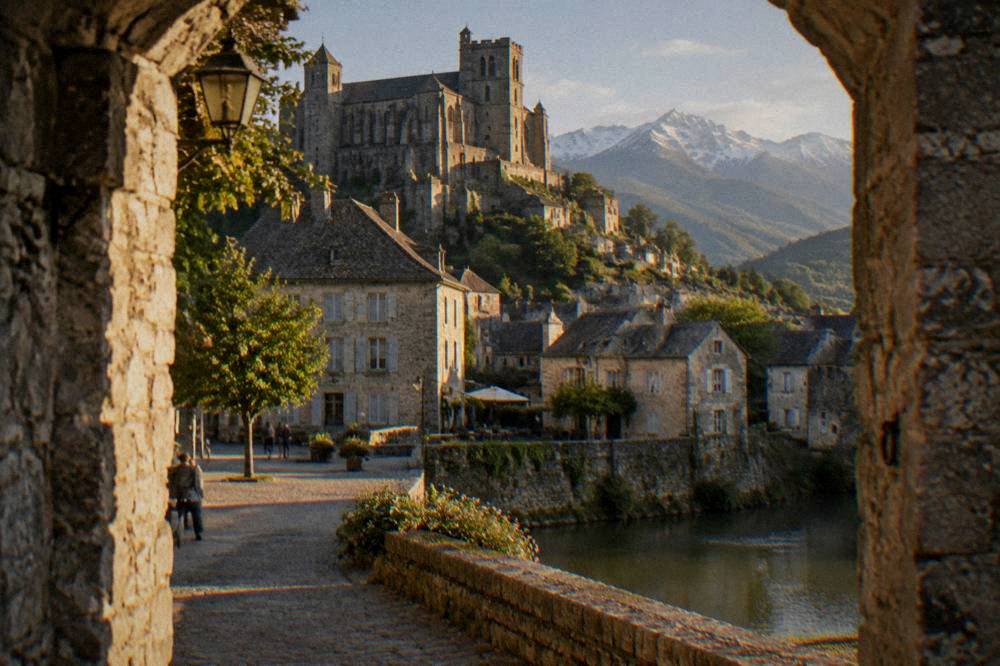
This site's honesty rules cut both ways: it will not invent opening hours, entry fees, or history for the cathedral, because none of that was verified in its sources, and a guide that guesses dates and prices is worse than one that sends you to check. What can be said is structural. The village is compact, the cathedral dominates it, and the walk from the lower streets to the summit is the experience. Check the current visitor information for the cathedral before you travel, since hours and access can change with the season and with services.
The practical rhythm that works for hill villages on this site's other pages applies here too. Arrive in the morning while the light is low and the streets are quiet. Walk up without a deadline. Spend the middle of the day on lunch, since food in these villages is part of the point, and the region's cooking leans on the same southwestern traditions as Toulouse itself, where cassoulet is the signature dish. Walk the upper streets again after lunch when the tour groups have thinned, then head back toward Toulouse before dark. If that rhythm appeals, the same logic shapes the Albi day trip and the Lourdes day trip, both of which sit on the map to the south and east of the city.
Can You Pair Saint-Bertrand-De-Comminges With Other Day Trips?
Yes, and the pairings fall out of the geography: the village sits on the southern side of Toulouse, toward the Pyrenees and the Lourdes route, so it combines naturally with mountain destinations rather than with the northern and western trips like Carcassonne or Albi. Travelers with two spare days often give one to the foothills and one to a coach excursion in another direction, which keeps the driving days short and varied.
The Pyrenees stand roughly 100 km south of Toulouse, and the Pyrenees day trip page covers the mountain side of that corridor. Lourdes sits further along the same southern axis, and the Andorra day trip page extends the logic for a longer mountain loop. Saint-Bertrand-de-Comminges fits as the quiet half of any of those itineraries, the place you stop when you want stone and silence rather than crowds.
For travelers who prefer to leave the driving to someone else on at least one day, the excursion roster on this site covers both directions. The coach day trip to Carcassonne is the featured pairing on this page, and the e-bike and Gaillac-region options round out the trio below. Each product page carries its own price, rating, and duration from the operator's live listing, so check the listing rather than any figure quoted elsewhere.
If your trip is anchored in Toulouse itself, the city gives you plenty to fill the days between excursions. The Basilica of Saint-Sernin is listed as part of the UNESCO "Routes of Santiago de Compostela in France" property, inscribed in 1998, and is a major stop on the Via Tolosana, the pilgrim route that ties the city to the same Santiago tradition that runs through the south of the region. The Notre-Dame de la Daurade page covers another of the city's churches, and the which saint is buried in Toulouse answer page settles a question visitors ask constantly.
What Should You Pack And How Should You Prepare?
Pack for walking and for changeable weather: comfortable shoes with grip, a layer for the wind that hills create, water, and euros for small purchases. Check the forecast the evening before, because the Toulouse averages describe the city, not the foothills, and mountain-edge weather shifts faster than the plain. A printed or offline map helps where signal drops.
The climate table above is your friend here. In May, the wettest month at 73.6 mm, a rain layer is not optional. In July and August, with more than eleven days a year above 30 C in the record, start early and carry more water than feels reasonable. In October, at 54.3 mm of rain and 155.2 hours of sunshine, the light is beautiful and the afternoons shorten quickly, so plan the return leg before dusk.
One more preparation note concerns the Toulouse end of the day. If you are flying out after your trip, the airport picture has a wrinkle worth knowing: tram T2 to Toulouse-Blagnac airport has been closed since 5 June 2023 and stays closed until the end of 2026 because of the Line C metro works, and the Navette aeroport bus runs one departure every 15 minutes in the meantime, taking 20 to 40 minutes to the center. The airport handled 7,621,409 commercial passengers in 2025, down 2.8% on 2024. None of that affects the village trip, but it affects the day you leave, and the Toulouse airport coverage on this site goes deeper.
For travelers who want a city experience on the days between excursions, a guided walk or a bike tour shows Toulouse efficiently. The Toulouse Travel Guide homepage covers the full range of options, and the solo picks below render live prices and ratings from each operator's listing.
The coach option above is the same Carcassonne excursion featured earlier on this page, shown here as a solo card so you can read its listing details on their own. If medieval walls are not your priority, the two picks that follow cover the city itself and the wine country to the northeast.
The e-bike card above suits travelers who want to trade the driving day for a day inside Toulouse, covering the city's highlights on two wheels instead of a mountain road. The final pick below heads in a third direction entirely, toward the Gaillac wine region.
Common Questions About Saint-Bertrand-De-Comminges
Quick answers to what planners ask most about this day trip.
How far is Saint-Bertrand-de-Comminges from Toulouse?
The village sits south of Toulouse on the way toward the Pyrenees, which stand roughly 100 km from the city.
Can you reach Saint-Bertrand-de-Comminges by public transport?
A short train ride from Toulouse-Matabiau reaches towns on the southern corridor, but this site has no verified timetable or fare for the final leg to the village. Check current train and bus schedules before committing, or plan to drive or join an organized excursion.
How long should you spend in Saint-Bertrand-de-Comminges?
A slow half day covers the walk up, the cathedral, and the views, with time for lunch. The village pairs well with a scenic drive or with another stop in the foothills, making a full day of the route.
What is the best month to visit?
The regional climate data favors July, the sunniest month at 258.6 hours of sunshine with only 40.1 mm of rain, and September, which still averages 210.1 hours of sunshine. May is the wettest month at 73.6 mm, which surprises planners who assume spring is dry.
Is Saint-Bertrand-de-Comminges a UNESCO site?
The sources do not state a UNESCO listing for Saint-Bertrand-de-Comminges, so no claim is made here.
Should you visit on a day trip or stay overnight?
A day trip from Toulouse suits the village's scale. If you want to slow down, the Lourdes and Pyrenees routes to the south offer overnight options, and staying in Toulouse keeps the widest choice of restaurants and transport, with the city's own sights filling the remaining days.