What Is The Main Shopping Street In Toulouse?
The main shopping street in Toulouse is rue d'Alsace-Lorraine, the pedestrian spine of the city center. Here is how to shop it, what sits around it, and how to get there.
Toulouse, the pink-brick city on the Garonne in the Occitanie region of southwestern France, has one street that almost every shopper ends up on: rue d'Alsace-Lorraine. It is the main shopping street in Toulouse, a pedestrian avenue that cuts straight through the city center from near the Capitole toward the Esquirol and Saint-Rome quarters. The street carries the big French and international retail names, but the more interesting shopping spills into the narrow streets on either side of it, where independent boutiques, bookshops and delicatessens hide among the pink brick. This page answers the question directly, then maps the streets around it, the markets and malls that complement it, and the practical numbers, transport fares and pass prices, that shape a shopping day in the city.
What Is The Main Shopping Street In Toulouse?
The main shopping street in Toulouse is rue d'Alsace-Lorraine, a pedestrian avenue that runs through the center of the city from the Esquirol end up toward the Capitole quarter. It carries the largest concentration of chain stores, department-style retail and foot traffic in Toulouse, and it links the Place du Capitole side of the center to the Saint-Rome and Dalbade streets around it.
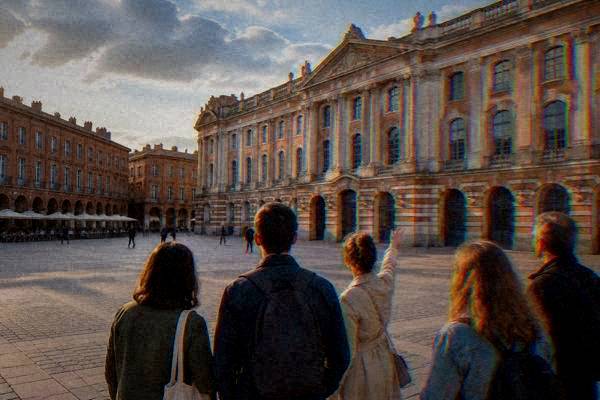
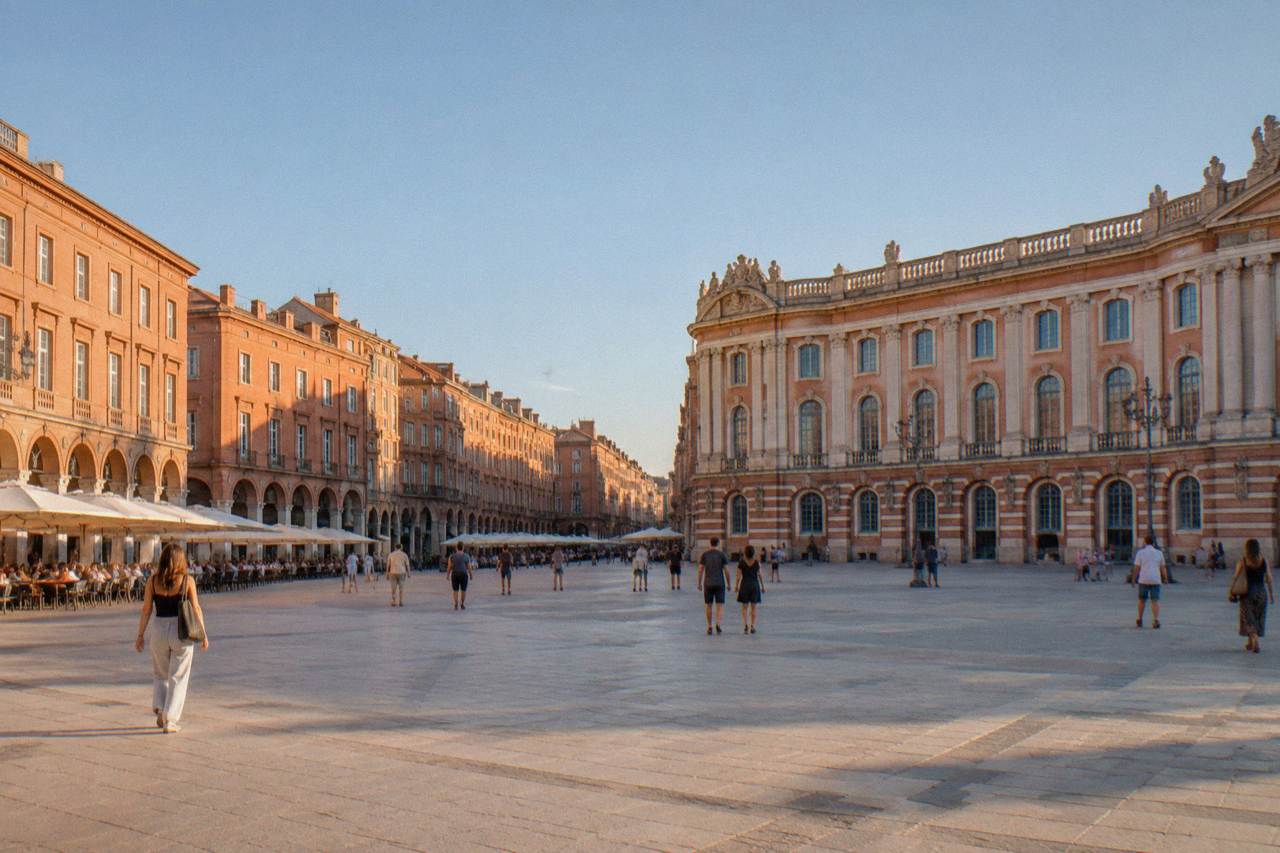
Rue d'Alsace-Lorraine works because of what surrounds it rather than what stands on it. The street itself is broad, straight and pedestrianized, which makes it the natural spine for anyone shopping in the center. But the streets that cross it and run parallel to it hold the character: rue Saint-Rome and rue des Changes, which carry smaller boutiques and jewelers, and the arcades of the Place du Capitole, where the city's historic covered passages open onto the square. A shopper who walks only rue d'Alsace-Lorraine sees the same brands found in any French city. A shopper who turns off it every hundred meters finds the Toulouse that sits underneath.
The street sits entirely within walking distance of the Capitole, the tourist office and the Garonne. From the Capitole end, the whole shopping quarter can be covered on foot in a loop that takes in the square, the pedestrian avenue, the side streets and, if you continue south, the Carmes district. Our full rundown of the city's retail quarters lives on the Toulouse shopping guide, which covers the neighborhoods beyond the center too.
Prefer a local to show you the quarter? Book a private walking tour here.
What Can You Find On Rue d'Alsace-Lorraine And Its Side Streets?
Rue d'Alsace-Lorraine carries the mainstream retail of Toulouse: national and international clothing chains, shoe stores, cosmetics and phone shops, plus banks and quick-service food outlets. Its side streets carry the specialty shopping: rue Saint-Rome and rue des Changes for jewelry and independent boutiques, the Capitole arcades for historic passages, and the streets toward Saint-Aubin and the Carmes for design, vintage and gourmet shops.
The division of labor is simple and it holds all week. The pedestrian avenue is where you go for the things you already know you need, socks, a suitcase wheel, a replacement charger, a fast fashion item. The side streets are where you go to browse. Rue des Changes, running toward the Basilique Saint-Sernin direction from the center, historically held the goldsmiths and money changers, and it still leans toward jewelry. Rue Saint-Rome, which connects the pedestrian avenue toward the Garonne, mixes small independent retailers with older Toulouse businesses.
South of the center, the Carmes district and the Saint-Aubin quarter, on the far side of the river from the shopping spine, add a different register again: concept stores, gourmet shops and weekend-market energy. If you are planning the wider trip around the city rather than one shopping afternoon, the question of how many days is enough for Toulouse matters here, because the side-street shopping rewards a second day.
For a first orientation, a sightseeing loop helps more than a map. The Toulouse Sightseeing Bus Tour passes the main sights in about an hour and gives you the geography of the center before you commit your legs to it. Check availability
How Do You Get To The Shopping Quarter, And What Does Transport Cost?
The shopping quarter around rue d'Alsace-Lorraine is served by Tisseo metro stations Esquirol and Capitole, both a short walk from the pedestrian avenue. The Tisseo catalogue gives a single trip at EUR 1.90, a day pass at EUR 7.20 and a 3-day pass at EUR 14.30, so a day of shopping combined with sightseeing is covered by the day pass, and a longer stay by the 3-day pass.
The two stations matter because of where they drop you. Capitole station puts you at the top of the shopping spine, by the square and the tourist office. Esquirol station puts you at the southern end, closer to the Carmes side streets. Between them, the whole quarter is pedestrian, so once you are in it, the metro is finished for the day unless you head out to a mall or a market further out. More of these guides are collected on Toulouse Travel Guide.
The fare table below comes from the Tisseo e-boutique catalogue. Note the on-board penalty for buying a single ticket from the driver at the last minute: EUR 2.50 instead of EUR 1.90, so buy before you board.
| Tisseo ticket | Price | Best for |
|---|---|---|
| Single trip | EUR 1.90 | One journey, bought in advance |
| Single trip bought on board | EUR 2.50 | Emergency only, costs more |
| 10 trips | EUR 16.00 | A stay with scattered journeys |
| Day pass | EUR 7.20 | A full shopping and sightseeing day |
| 3-day pass | EUR 14.30 | A long weekend |
| Airport single (network + Navette) | EUR 9.50 | Arriving from Toulouse-Blagnac |
One caution that catches visitors at the airport: the tram line T2 to Toulouse-Blagnac has been closed since 5 June 2023 and stays closed until the end of 2026 because of the metro Line C works. The airport link is the Navette, which the airport's transport page says runs one departure every 15 minutes and takes 20 to 40 minutes to the center. Do not plan a tram ride to the airport.
Does The Pass Tourisme Help With A Shopping Trip?
The tourist office's Pass Tourisme costs EUR 26 for stays of one to three days and pays off from the third activity, and it includes a free guided tour from the tourist office. Adding EUR 10 gives ten public-transport trips, which covers the journeys between the shopping quarter and the museums you might pair with it. The pass is a sightseeing tool more than a shopping tool, but a mixed day of retail and culture is exactly where it earns its price.
The tourist office's Pass Tourisme page lists what the pass covers at the municipal museums and monuments: Fondation Bemberg at EUR 12 normal rate, the Museum at EUR 12, Les Abattoirs at EUR 12, the Musee des Augustins at EUR 5 and the Couvent des Jacobins at EUR 5, all free with the pass. Cite de l'espace, at a normal adult rate of EUR 29, is discounted rather than free with the pass. A shopping trip that also takes in two or three of these breaks even, which is the office's own "third activity" logic.
| What the pass covers | Normal rate | With the Pass Tourisme |
|---|---|---|
| Fondation Bemberg | EUR 12 | Free |
| Museum de Toulouse | EUR 12 | Free |
| Les Abattoirs | EUR 12 | Free |
| Musee des Augustins | EUR 5 | Free |
| Couvent des Jacobins | EUR 5 | Free |
| Cite de l'espace | EUR 29 | Discounted |
| Guided tour from the tourist office | Paid | Free |
| 10 transport trips (add-on) | EUR 10 | Optional add-on |
Timing matters more than the pass does for one specific site. The Musee des Augustins is temporarily closed from 21 September to 2 October 2026 for great-cloister works, and its Gothic halls reopen on 3 October 2026 from 10:00. If your shopping-and-museums day falls in that window, plan around it. The Couvent des Jacobins, free on the first Sunday of the month except when a temporary exhibition is on, pairs well with a Sunday shopping stroll, though French Sunday trading laws mean the big stores on the pedestrian avenue will be shut, and the markets and cafés carry the day instead.
What About Markets, Malls And Shopping Beyond The Center?
Beyond the pedestrian center, Toulouse's shopping shifts to its markets and its outlying retail parks: the Victor Hugo market for food, the covered markets of the neighborhoods for everyday shopping, and the malls at the edge of the city for chain retail at scale. The Victor Hugo market is the one to build a day around, because it doubles as the city's food emporium and its most reliable indoor browsing, whatever the weather does.
The Victor Hugo market is the anchor. It is the city's central food market, and its stalls and surrounding counters sell the products Toulouse is known for: cassoulet ingredients, Toulouse sausage, the area's cheeses and, in season, violets, the flower the city adopted as its symbol. If you want the deeper background on the city's signature dish, read what exactly is a cassoulet, and for where the people who live here actually eat, see where do locals eat in Toulouse. The market quarter sits at the southern edge of the shopping spine, so it slots naturally into the same walk.
Out at the edge of the city, the retail parks and malls hold the big-box shopping that does not fit the historic center. These are the places for clothes in French sizes at French prices, electronics and household goods. They are reachable on the Tisseo network, which is where the 10-trip ticket at EUR 16.00 or the day pass at EUR 7.20 from the fare table above becomes relevant. For anyone weighing which part of the city to book a hotel in, with shopping access as one of the criteria, the breakdown in what is the nicest part of Toulouse is the companion read.
Weather is a real variable in the planning. Meteo-France's 1991-2020 normals for Toulouse-Blagnac show the wettest month is May at 73.6 mm of rain, well ahead of February at 37.2 mm, while July, the sunniest month at 258.6 hours of sunshine, gets just 40.1 mm. The covered market and the arcades around the Capitole are the wet-day fallback; the pedestrian avenue and the riverside walk are the dry-day reward.
Common Questions About Shopping In Toulouse
Quick answers to what planners ask most about shopping in the city.
What is the main shopping street in Toulouse?
Rue d'Alsace-Lorraine is the main shopping street in Toulouse. It is a pedestrian avenue running through the city center, with the Capitole and Esquirol metro stations at either end of the shopping quarter, and the boutique streets of rue Saint-Rome and rue des Changes crossing and running alongside it.
Are shops in Toulouse open on Sunday?
French Sunday trading rules restrict large stores, so the chain shops on the pedestrian avenue are generally shut on Sunday. Markets, cafés, bakeries and some small independent shops open, and the Victor Hugo market area carries the day for food shopping.
Is the shopping quarter walkable?
Yes. The whole quarter, from the Capitole through rue d'Alsace-Lorraine to the Carmes district and the Victor Hugo market, is compact and mostly pedestrianized, and the Garonne riverside sits a few minutes off the avenue.
What should you buy in Toulouse?
The products the city is known for are its food ones: Toulouse sausage, cassoulet ingredients and violet-themed sweets and gifts. Around them, the side streets off the main avenue carry independent fashion, jewelry on rue des Changes, and books and design in the Carmes and Saint-Aubin quarters.
Does the Pass Tourisme cover shopping?
No. The Pass Tourisme, EUR 26 for one to three days, covers museums, monuments and a guided tour, not retail. Its value on a shopping trip comes from pairing the stores with the museums around them, and from the EUR 10 add-on of ten transport trips.
The pedestrian avenue answers the headline question, but the honest answer to shopping in Toulouse is the whole quarter: the spine of rue d'Alsace-Lorraine for the practical, the side streets for the interesting, the Victor Hugo market for the edible, and the arcades and museums around the Capitole for everything in between. Walk it once end to end, then turn off it and stay off it.