Is Toulouse Close To Nice?
Is Toulouse close to Nice? The honest answer for trip planning: the two cities sit on opposite sides of France, and here is what that means for your itinerary.
Toulouse, the pink-brick "La Ville Rose" on the Garonne in the Occitanie region of southwestern France, comes up in Riviera itineraries more often than geography would suggest. Nice has the Mediterranean; Toulouse has the river, the Canal du Midi and the aerospace industry. Visitors building a France route want to know whether the pair can be stacked into one week without burning two of those days in transit, and the honest answer is that they cannot. This page sets out what that distance means in practice, what the alternatives are, and why Toulouse rewards the detour on its own terms rather than as a stop on the way to the coast.
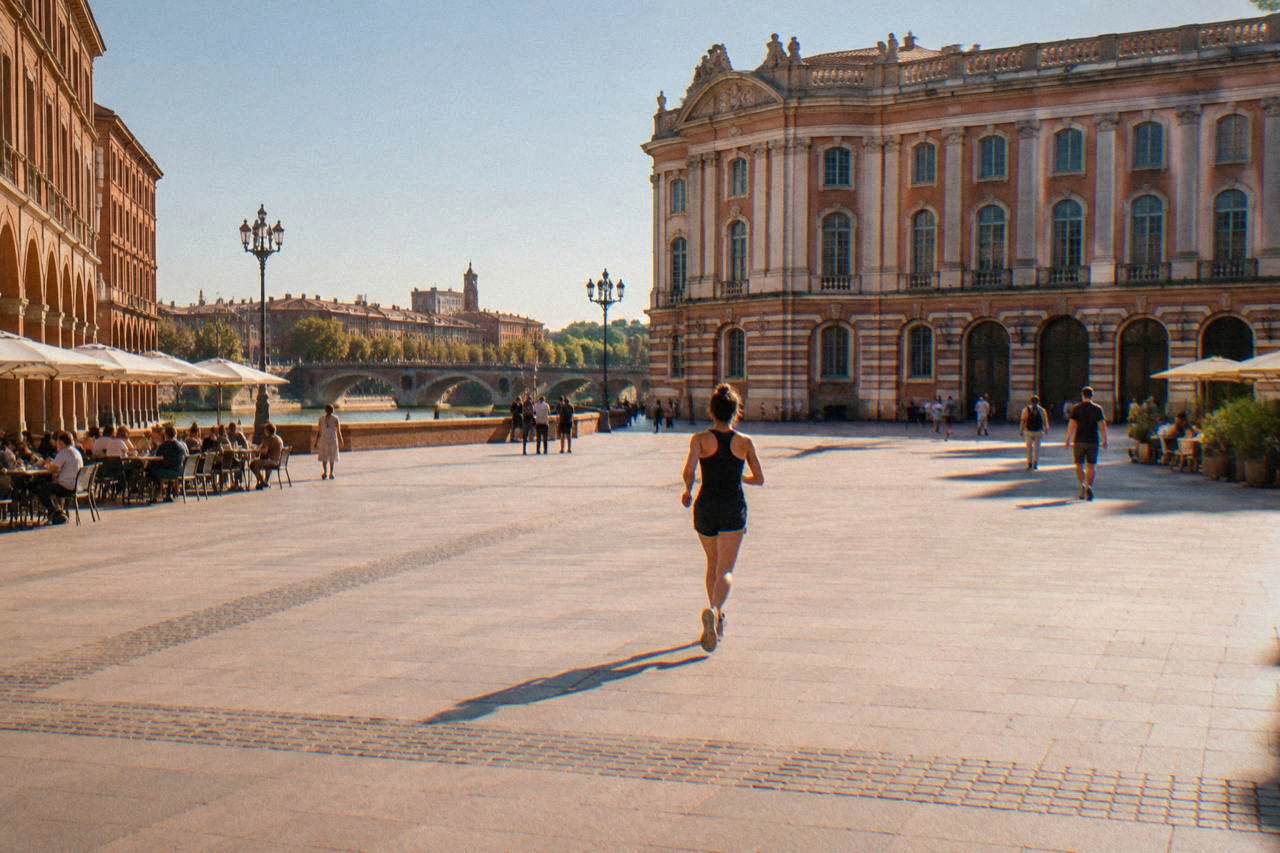
Is Toulouse Close To Nice?
No, Toulouse is not close to Nice. The two cities lie on opposite sides of France: Toulouse in the southwest on the Garonne, Nice on the Mediterranean coast in the far southeast. Any route between them crosses most of the country, so the pairing works only if you treat them as two separate trips or as the two ends of a long France itinerary.
That is the planning reality, and it is worth stating plainly because search results and social feeds often make the two cities look like neighbors on a French Riviera circuit. They are not. Toulouse is an inland city, and the site's own comparison page on Toulouse vs Nice covers the character differences in detail. What matters here is the logistics: a traveler who lands in Nice expecting a quick hop to Toulouse, or the reverse, is in for a full day of travel each way. If your heart is set on both, fly between them or build a route that earns the distance with stops along the way, but do not plan them as a single afternoon's transfer.
The mistake usually happens in one direction. Someone books a cheap flight into Toulouse, sees Nice on the same map of France, and assumes a couple of hours by train will bridge them. France is a big country, and these two cities occupy corners of it that have historically looked away from each other: Toulouse toward the Pyrenees and Spain, Nice toward Italy and the sea. The result is that the corridor between them is one of the less-traveled diagonals in the country, served mostly by connections rather than fast direct links.
Where Do Toulouse And Nice Sit Relative To Each Other?
Toulouse sits in the southwest of France, on the Garonne river and the Canal du Midi, with the Pyrenees roughly 100 km to the south. Nice sits on the Mediterranean coast in the southeast, at the opposite end of the country. Between them lies most of southern France, including the Massif Central and the long diagonal of inland Languedoc, which is why no itinerary treats them as neighbors.
For orientation, think of France as a rough hexagon. Toulouse occupies the southwestern quadrant, closer to Spain than to Paris, and its own airport at Blagnac handled 7,621,409 commercial passengers in 2025, down 2.8% on 2024, which gives a sense of the city's weight as a destination in its own right. Nice anchors the southeastern corner. The cities that genuinely neighbor Toulouse are the day-trip towns this site covers elsewhere: Carcassonne, Albi, Cordes-sur-Ciel, and the Pyrenean valleys, some of which are discussed on beautiful towns to visit near Toulouse and the closest city to the Pyrenees.
| Orientation fact | Toulouse | What it means for planning |
|---|---|---|
| Position | Southwestern France, Occitanie | Base for Pyrenees and Spain-facing trips |
| Water | The Garonne river and the Canal du Midi | River and canal scenery, no sea |
| Mountains | Pyrenees roughly 100 km south | Day-trip territory, not city content |
| Coast | None; Toulouse is inland | A beach day is not on the menu |
| Neighbor cities | Carcassonne, Albi, Montauban | Short regional outings |
The table above is the mental map to hold onto. Toulouse's gravitational pull is toward the southwest: the Cathar castles, the Gaillac wine route, Lourdes, Andorra. Nice's pull is toward the Riviera and Italy. Building a trip that includes both means accepting that the middle of France, or a flight, is part of the plan.
How Do You Travel Between Toulouse And Nice?
The practical options are a flight between Toulouse-Blagnac and the Cote d'Azur, or a long rail journey with changes, because the two cities are not linked by a fast direct service in the way Paris connects to each of them. Give the intercity leg a full day either way, and if your time is short, flying is the option that preserves actual sightseeing days.
On the ground in Toulouse itself, transport is cheap and simple, which helps once you arrive. The Tisseo catalogue lists a single trip at EUR 1.90, a day pass at EUR 7.20 and a 3-day pass at EUR 14.30, with no 2-day pass on offer. The airport link is the Navette aeroport, since tram T2 to the airport has been closed since 5 June 2023 and stays closed until the end of 2026 because of the Line C metro works; the Navette runs one departure every 15 minutes and takes 20 to 40 minutes to the center. The airport single, covering the Tisseo network plus the Navette, is EUR 9.50. The full index of guides sits on Toulouse Travel Guide.
| Tisseo ticket | Price | Notes |
|---|---|---|
| Single trip | EUR 1.90 | Standard metro, bus and tram fare |
| Single bought on board | EUR 2.50 | Last-minute purchase penalty |
| 10 trips | EUR 16.00 | Cheapest per-trip option |
| Day pass | EUR 7.20 | One calendar day |
| 3-day pass | EUR 14.30 | No 2-day pass exists |
| Airport single | EUR 9.50 | Tisseo network plus Navette aeroport |
For the Toulouse-to-Nice leg itself, the honest advice is to check current schedules rather than trust any fixed figure, because rail times and connections shift with the timetable year. What does not shift is the geometry: you are crossing the country's full width. If you want a taste of what a slow French rail journey can offer instead, the Canal du Midi corridor and the routes toward the Mediterranean coast are covered in the best canal trip in France, and the city's own UNESCO-listed canal cruise is one of the more popular ways to spend a Toulouse afternoon.
What Makes Toulouse Worth The Trip On Its Own?
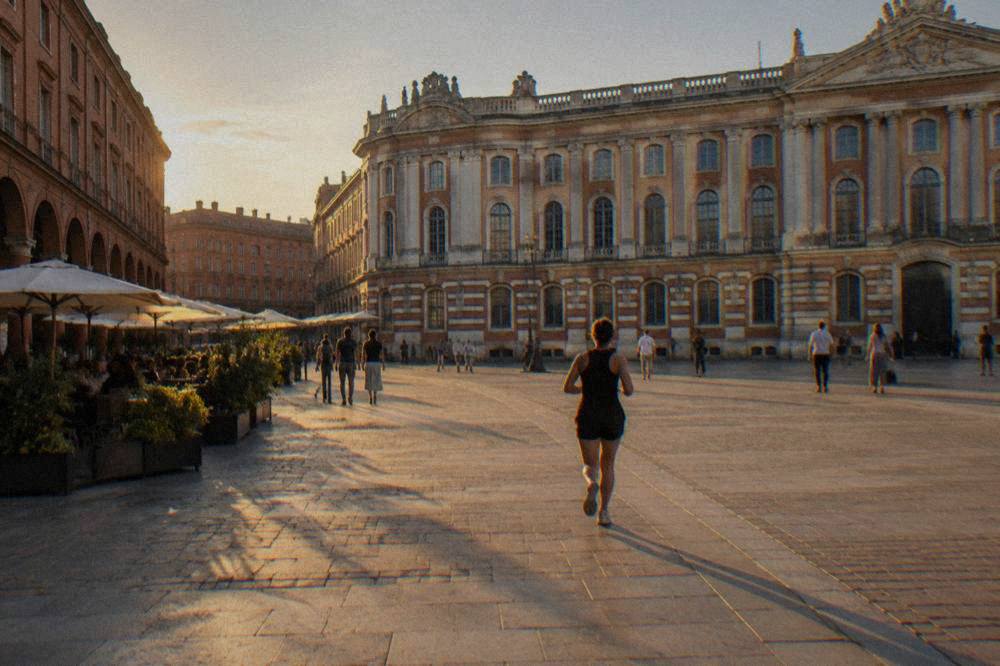
Toulouse earns a visit without any help from the Riviera: it holds the UNESCO-listed Canal du Midi, the Basilique Saint-Sernin as part of the Routes of Santiago de Compostela inscribed in 1998, a 514,819-strong commune population that makes it a genuine big city, and an aerospace cluster with the Aeroscopia museum and Airbus factory tours. The pink brick of La Ville Rose gives it a look no coastal city can copy.
Start with the UNESCO credentials, because they are real and specific. The Canal du Midi was inscribed in 1996 under criteria i, ii, iv and vi, and the Basilique Saint-Sernin is listed as part of the Routes of Santiago de Compostela in France, inscribed in 1998, as a major stop on the Via Tolosana. Those are two distinct World Heritage threads running through one inland city, which is more than many French destinations of any size can claim.
Then there is the aerospace side, which is genuinely unique in Europe. Aeroscopia charges adults EUR 16, is open daily 9:30-18:00 with last entry at 17:00, and houses aircraft that exist nowhere else in this concentration. The Manatour Airbus factory tours run A350 and A321 visits of 1h30 each at EUR 18 for adults, with one hard requirement worth repeating: an original passport or ID card is compulsory, no photocopies and no phone images, and visitors must arrive well before the scheduled start. For a deeper look at the industry's footprint in the city, see what Airbus does in Toulouse coverage elsewhere on the site.
If planes are not your thing, the city's museum layer is unusually rich. The Musee des Augustins, closed for great-closter works from 21 September to 2 October 2026, reopens its Gothic halls on 3 October 2026 at 10:00. The Couvent des Jacobins is free on the first Sunday of the month except when a temporary exhibition is on, and its normal entry is EUR 5. The tourist office's Pass Tourisme costs EUR 26 for stays of one to three days, includes a free guided tour from the office, and pays off from the third activity, with EUR 10 more adding ten public-transport trips.
How Many Days Should You Give Toulouse?
Two full days is the honest minimum, and three lets you breathe. The city's core, from the Capitole to the Jacobins and the Garonne banks, fills a day; the second day belongs to the Canal du Midi, the aerospace museums or a day trip to Carcassonne. Squeezing Toulouse into a single afternoon between two long transfers wastes the fare you paid to get there.
The site's own planning guide on how many days is enough for Toulouse walks the itineraries day by day, but the short version is that Toulouse is a walking city with a compact historic core, and the payoff comes from slowing down rather than sprinting. A good compromise for a short stay is an audio tour you control yourself: the Uncover Secrets in-app audio tour of the Pink City lets you set the pace, and you can Check availability alongside the site's Toulouse walking tours options.
Weather shapes the calendar more than visitors expect. Meteo-France's 1991-2020 normals for Toulouse-Blagnac show the wettest month is May at 73.6 mm, with April at 65.2 mm and June at 64.2 mm close behind, while July, the sunniest month at 258.6 hours, gets just 40.1 mm. Annual rainfall is 627 mm across 95.8 rain days, with 2,075.1 hours of sun. The surprise for most planners is that spring, not winter, is the damp season, which the site's pages on the coldest month in Toulouse and whether it rains a lot in Toulouse unpack further.
| Month | Mean temperature | Rainfall |
|---|---|---|
| January | 6.3 C | 52.5 mm |
| April | 12.7 C | 65.2 mm |
| May | 16.4 C | 73.6 mm |
| July | 22.6 C | 40.1 mm |
| August | 22.8 C | 44.6 mm |
| October | 15.3 C | 54.3 mm |
For anyone weighing the two cities against each other rather than trying to bolt them together, the honest framing is that they are different products. Nice sells the sea. Toulouse sells brick, canals, planes and cassoulet, and the site's signature dish of Toulouse page explains why the food alone justifies the stop.
Common Questions About Toulouse And Nice
Quick answers to what planners ask most about pairing these two cities.
Is Toulouse Close To Nice?
No. Toulouse is in southwestern France and Nice is on the Mediterranean coast in the southeast, on opposite sides of the country. Treat them as two separate destinations or as the two ends of a long France itinerary.
Can You Do Toulouse And Nice In One Trip?
Yes, but only with a flight between them or a full travel day each way. The pairing works best as a two-week France route, not as a single week in which both cities get proper time.
Which City Is Better For A First Trip To Southern France?
They serve different moods. Nice suits travelers who want the sea and Riviera glamour; Toulouse suits travelers who want a walkable inland city with UNESCO sites, aerospace museums and a strong food culture.
What Is Close To Toulouse Instead Of Nice?
Carcassonne, Albi, Cordes-sur-Ciel and the Pyrenees, roughly 100 km south. The city's day-trip range is one of its strongest assets.
Is Toulouse Worth Visiting Without The Riviera?
Yes. The Canal du Midi and the Basilique Saint-Sernin carry UNESCO listings, and the city's museums, markets and aerospace attractions fill three days without any coastline at all.
The bottom line: keep Toulouse and Nice apart in your planning, and give each the days it deserves. If the southwest wins the coin toss, the Ville Rose will not feel like a consolation prize.