What Is The Closest City To The Pyrenees?
Toulouse, in southwestern France, is the closest major city to the Pyrenees, sitting roughly 100 km from the range. Here is what that means for planning a trip.
Toulouse, the pink-brick "La Ville Rose" on the Garonne river in the Occitanie region of southwestern France, is the closest major city to the Pyrenees. The range sits roughly 100 km to the south of the city, close enough that the mountains shape day-trip planning for visitors who base themselves here. This page explains what that distance means in practice, which mountain towns sit within reach, and why Toulouse works as a base for a Pyrenees itinerary.
What Is The Closest City To The Pyrenees?
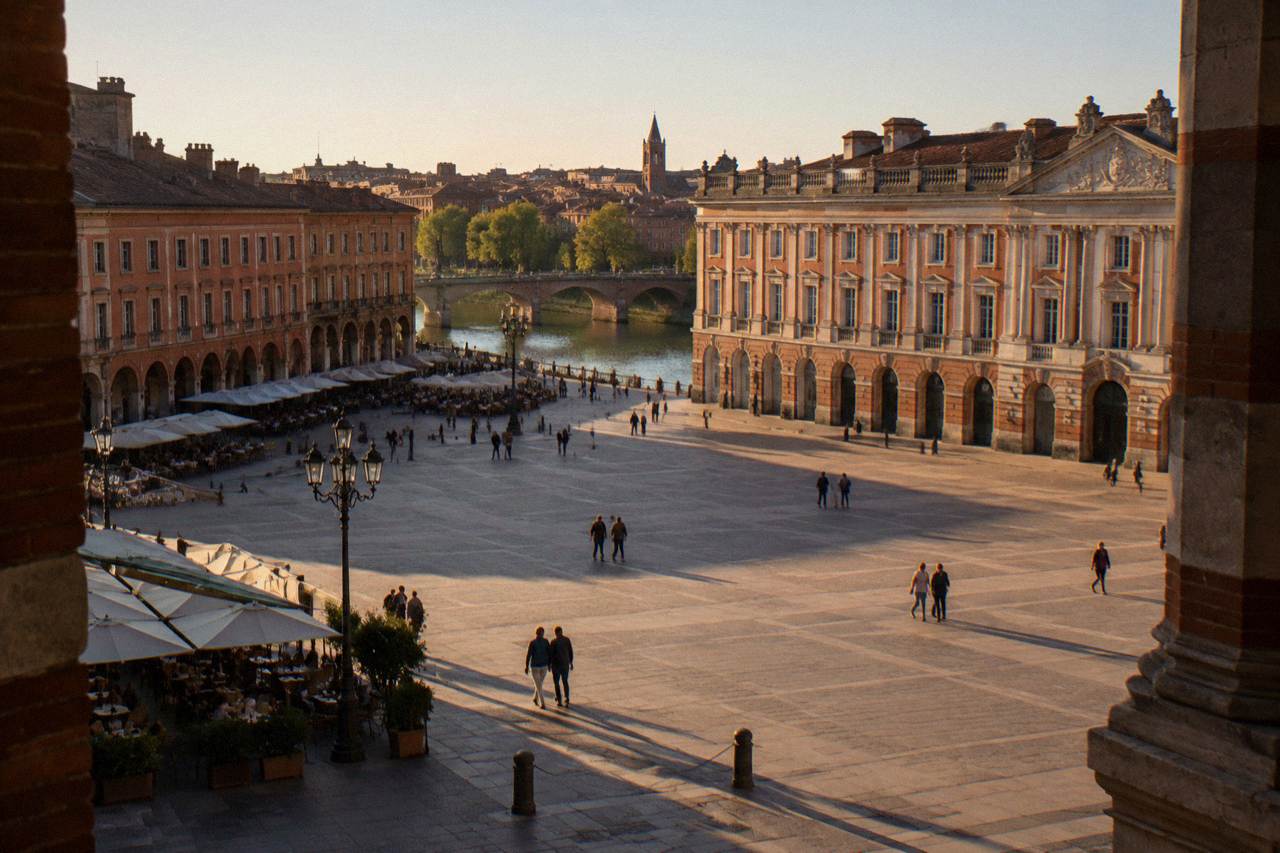
Toulouse, the prefecture of Haute-Garonne in southwestern France, is the closest major city to the Pyrenees. The city of 514,819 inhabitants (INSEE, population in 2023) sits on the Garonne river, and the mountain range lies roughly 100 km to its south. No other French city of comparable size stands nearer to the range, which makes Toulouse the natural urban gateway for a Pyrenees trip.
The question usually comes from someone planning a trip that mixes a city with mountains, and Toulouse answers it well. The city is inland, on the Garonne and the Canal du Midi, and it looks south toward the chain that marks the border with Spain and Andorra. A traveler can spend mornings among pink-brick cloisters and afternoons planning a route into the hills.
The city's own character earns its place as a base, not just its position. Toulouse Travel Guide covers the city in depth, from the Basilique Saint-Sernin, a listed component of the UNESCO "Routes of Santiago de Compostela in France" property inscribed in 1998, to the Canal du Midi, inscribed by UNESCO in 1996. For a sense of how the mountains fit into a wider trip, the question of how many days is enough for Toulouse matters, because every day given to the Pyrenees is a day taken from the city.
The nickname deserves a word too. Toulouse is called La Ville Rose for the pink brick of its buildings, a look that gives the city its identity and its light, especially in the early morning and late afternoon. The brick is the first thing a visitor notices on the walk between the Capitole and the river, and it is the backdrop to every city-side day of a combined trip.
| Fact | Figure | Source Basis |
|---|---|---|
| Population of Toulouse commune | 514,819 | INSEE, population in 2023 |
| Distance to the Pyrenees | Roughly 100 km south | Site facts |
| Annual rainfall | 627 mm over 95.8 rain days | Meteo-France 1991-2020 normals, Toulouse-Blagnac |
| Annual sunshine | 2,075.1 hours | Meteo-France 1991-2020 normals, Toulouse-Blagnac |
| UNESCO listings touching the city | Canal du Midi (1996), Saint-Sernin as part of the Santiago routes (1998) | UNESCO |
How Far Is Toulouse From The Pyrenees, Really?
The Pyrenees sit roughly 100 km to the south of Toulouse, a distance that turns the range into day-trip territory rather than a relocation. The site's verified facts give that figure for the range as a whole, so treat it as the planning number: the first foothills and spa towns are a short drive or a direct train ride away, with no verified journey time printed here because none was confirmed on an official page.
What that distance does to a trip is practical. It means a visitor does not need to choose between the city and the mountains, only to sequence them. It also means the weather in Toulouse and the weather in the high Pyrenees can differ sharply on the same day, so the climate record for the city is worth knowing before any mountain plan is fixed.
Meteo-France's 1991-2020 climate normals for Toulouse-Blagnac show a city with warm summers and rain spread through the year. July is the sunniest month, at 258.6 hours of sunshine, with only 40.1 mm of rain and 11.5 days a year that reach 30 C or more. The surprise for many planners is where the rain falls: May is the wettest month at 73.6 mm, almost double February's 37.2 mm, with April (65.2 mm) and June (64.2 mm) close behind. Anyone heading for the high country in spring should pack for showers in Toulouse before the trailhead.
| Month | Mean Temperature (C) | Rainfall (mm) |
|---|---|---|
| January | 6.3 | 52.5 |
| February | 7.1 | 37.2 |
| March | 10.3 | 45.3 |
| April | 12.7 | 65.2 |
| May | 16.4 | 73.6 |
| June | 20.3 | 64.2 |
| July | 22.6 | 40.1 |
| August | 22.8 | 44.6 |
| September | 19.3 | 45.7 |
| October | 15.3 | 54.3 |
| November | 9.9 | 55.0 |
| December | 7.0 | 49.3 |
The table comes from the Meteo-France fiche climatologique for the Toulouse-Blagnac station, and it is the record to check when deciding which month to combine a city stay with a mountain excursion. Summer gives the most reliable warmth, autumn spreads the rain more evenly, and February is the driest month of all, at 37.2 mm. The records for the station run from 1947 to June 2025, with a high of 42.4 C on 23 August 2023 and a low of -19.2 C on 15 February 1956, figures that frame how wide the seasonal swing can be even before the mountains add their own weather.
Which Pyrenees Places Can You Reach From Toulouse?
Lourdes is the mountain-side destination with a direct bookable connection from Toulouse: a half-day spiritual getaway runs from the city to the grotto and basilica and back, and the site's roster lists it as a day trip of about four hours. The Pyrenees guide on this site covers the range's towns and valleys in detail, and the question of the most famous town in the Pyrenees has its own answer page for anyone choosing a single mountain stop.
The Lourdes trip is the clearest example of how the 100 km gap works in a traveler's favor. The listing covers transport from Toulouse to the sanctuary, the grotto and the basilica, which removes the need to arrange a mountain drive alone. For anyone whose trip is anchored on the city, it converts the Pyrenees from an aspiration into a bookable morning or afternoon.
The range itself deserves more than one visit if time allows. The Pyrenees day-trip guide lays out what the mountains offer from a Toulouse base, and the answer to what is the most famous town in the Pyrenees helps narrow the choice for a first trip. Both pages sit inside the same planning question: how much mountain, and how much city, fits into one stay.
Is Toulouse A Good Base For A Pyrenees Trip?
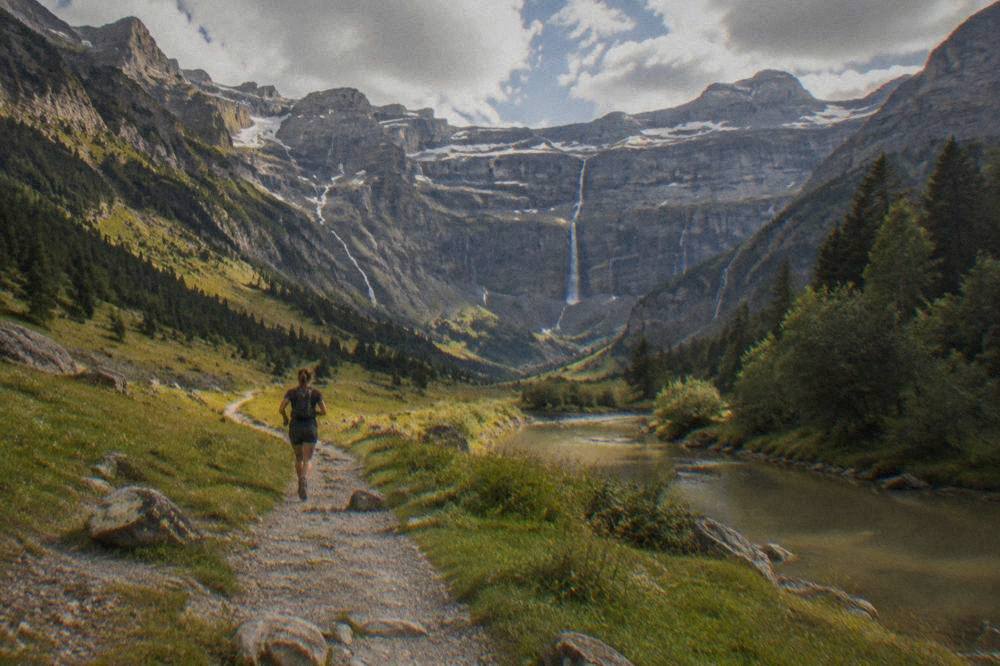
Yes, because the city combines the transport, the lodging depth and the rainy-day options that mountain villages cannot match, all while sitting roughly 100 km from the range. Toulouse-Blagnac airport handled 7,621,409 commercial passengers in 2025, the Tisseo network runs metro, bus and tram across the city, and the museums and restaurants give a full program for any day the mountains are closed in by weather.
The airport number matters for anyone flying in for a combined trip. Toulouse-Blagnac sits northwest of the city, and the airport's own pages describe the Navette bus, one departure every 15 minutes, taking 20 to 40 minutes to the center while tram T2 stays closed until the end of 2026 for the metro Line C works. Line C itself, 27 km and 21 stations from Colomiers to Labege, is scheduled to open at the end of 2028.
Getting around inside the city is cheap by the standards of major French cities. The Tisseo e-boutique catalogue lists a single trip at EUR 1.90, a day pass at EUR 7.20 and a 3-day pass at EUR 14.30, with 10 trips at EUR 16.00 for longer stays. An airport single, covering the Tisseo network plus the Navette, costs EUR 9.50. Those fares are what make a car-free version of a combined city-and-mountains trip realistic.
The city side of the trip holds up on its own. The tourist office's Pass Tourisme, at EUR 26 for stays of one to three days, includes a free guided tour from the office and free entry to the museums it lists, from the Fondation Bemberg at a normal rate of EUR 12 to the Couvent des Jacobins at EUR 5. The pass pays off from the third activity, which is a fair description of how quickly a museum-heavy day in Toulouse accumulates value before a mountain day begins.
What Else Sits Near Toulouse, Besides The Mountains?
Toulouse's position puts the Canal du Midi, the UNESCO-listed waterway inscribed in 1996, right at the city, and a belt of medieval towns across Occitanie within day-trip range: Carcassonne, Albi with its own UNESCO listing, and Cordes-sur-Ciel all have bookable coach and small-group trips from the city. The Pyrenees are the southern draw, but they share the region with vineyards, cathedrals and fortified cities that sit in every other direction.
That spread of options is the real answer to why the "closest city" question matters. A base that only reaches the mountains would be a mountain base. Toulouse reaches the mountains and then keeps going: west toward Gaillac wine country, northeast toward Albi, southeast toward Carcassonne, and south toward the hills. The site's guide to beautiful towns to visit near Toulouse maps the full set.
For food-minded travelers, the city's own table is part of the draw. The question of what is the must-eat in Toulouse and the story of the signature dish of Toulouse both point to cassoulet and the local sausage tradition, which is a reasonable way to end a day that started in thin mountain air. A morning in the foothills and an evening plate in a pink-brick dining room is the shape of the trip this city makes possible.
Common Questions About The Closest City To The Pyrenees
Quick answers to what planners ask most about Toulouse and the mountains.
What is the closest city to the Pyrenees?
Toulouse, in southwestern France, is the closest major city to the Pyrenees, sitting roughly 100 km north of the range on the Garonne river.
Can you see the Pyrenees from Toulouse?
The site's verified facts give the distance, roughly 100 km, but no visibility claim, so treat any view of the range as weather-dependent and not promised here.
Is there a train from Toulouse to the Pyrenees?
Train connections toward the mountains exist, but no journey time or fare for any Pyrenees route was verified on an official page, so this site prints none. The bookable Lourdes getaway covers its own transport.
How many days should a combined Toulouse and Pyrenees trip take?
Plan at least one full day for the city's core sights and one day for the mountains, then add days for museums or further towns. The answer page on how many days is enough for Toulouse breaks the city side down.
Which is better, basing in Toulouse or in a Pyrenees town?
Toulouse suits travelers who want museums, restaurants and transport links alongside the mountains; a mountain town suits travelers whose days are all trail days. The distance, roughly 100 km, is what makes the split possible.
What does a trip to the Pyrenees from Toulouse cost?
The bookable Lourdes getaway carries its own price on the operator's live listing, and this site prints product figures only from the listing itself. City-side costs are easier to plan: a Tisseo day pass is EUR 7.20 and the Pass Tourisme is EUR 26 for one to three days.
For a trip that pairs the two, the Lourdes getaway from Toulouse is the simplest bridge: Check availability on the operator's live listing before locking the rest of the itinerary.