Is English Widely Spoken In Toulouse?
A practical answer to whether English is widely spoken in Toulouse, in southwestern France: where to expect English, where French matters, and how to plan around the language gap.
Toulouse, the pink brick "La Ville Rose" on the Garonne in the Occitanie region of southwestern France, is a working aerospace and university city first and a tourist destination second. That order matters for language. Visitors who ask whether English is widely spoken here usually want to know one thing: can they book a table, buy a metro ticket and take a tour without a word of French? The honest answer is mostly yes in the tourist-facing places, and patchier everywhere else. This page on Toulouse Travel Guide lays out where English reliably works, where it does not, and how to bridge the gap.
Is English Widely Spoken In Toulouse?
No, English is not widely spoken across Toulouse in the way it is in Europe's biggest tourist capitals, but it is reliably present where visitors actually need it: hotels, the tourist office, major museums and the paid guided tours. In ordinary bakeries, markets, bus drivers' cabins and neighborhood restaurants, you should expect French to be the working language, and a few polite phrases to carry real weight.
The distinction to hold onto is between the visitor economy and the daily city. The tourist office on the Place du Capitole exists partly to serve international visitors, and its Pass Tourisme page is published in English. The big sights, from the Basilique Saint-Sernin to the Cite de l'espace, sell tickets and hand out materials in English. Step outside that circuit, into a butcher's queue or a Sunday market stall, and English becomes a bonus rather than an expectation.
This is not a Toulouse-specific quirk. France in general, and its medium-sized inland cities in particular, run daily life in French. Toulouse's population of 514,819 (INSEE, 2023) includes a large student and aerospace workforce with more English than the national average, but the front-of-house jobs a visitor meets most often, in shops and on public transport, are not selected for English.
Planning around it is easy, and that is the real message of this page. A visitor who books English-language tours, carries a phrase or two and uses the tourist office as a base can spend several days in Toulouse without a language problem. A visitor who assumes English everywhere will hit friction in the first bakery.
Prefer to explore at your own pace with English commentary? Book a self-guided audio tour here.
Where English Works Reliably In Toulouse
English works reliably in the places built for visitors: the tourist office, hotel front desks, the major museums, the Basilique Saint-Sernin and the Cite de l'espace, and every paid guided tour sold with an English-language option. It also works in the aerospace-adjacent world, where the industry's working culture leans on English. Outside those zones, in markets, small shops and on the Tisseo network itself, you should assume French.
Start with the tourist office. Its Pass Tourisme page lists what the pass includes in English, and the office runs a free guided tour for pass holders, which is the single most useful English-language resource in the city. The pass costs EUR 26 for stays of one to three days, pays off from the third activity, and adding EUR 10 buys ten public-transport trips on top.
The major attractions follow the same pattern. The Cite de l'espace, the space theme park on the city's eastern side, publishes visitor information in English and sells an e-ticket that removes the counter conversation entirely. Aeroscopia, the aviation museum next to the Airbus sites, gives practical information in English on its own page. The paid guided tours of the city, by foot, bike, bus and boat, are sold with English as the default language for international customers, and the listings state the language clearly.
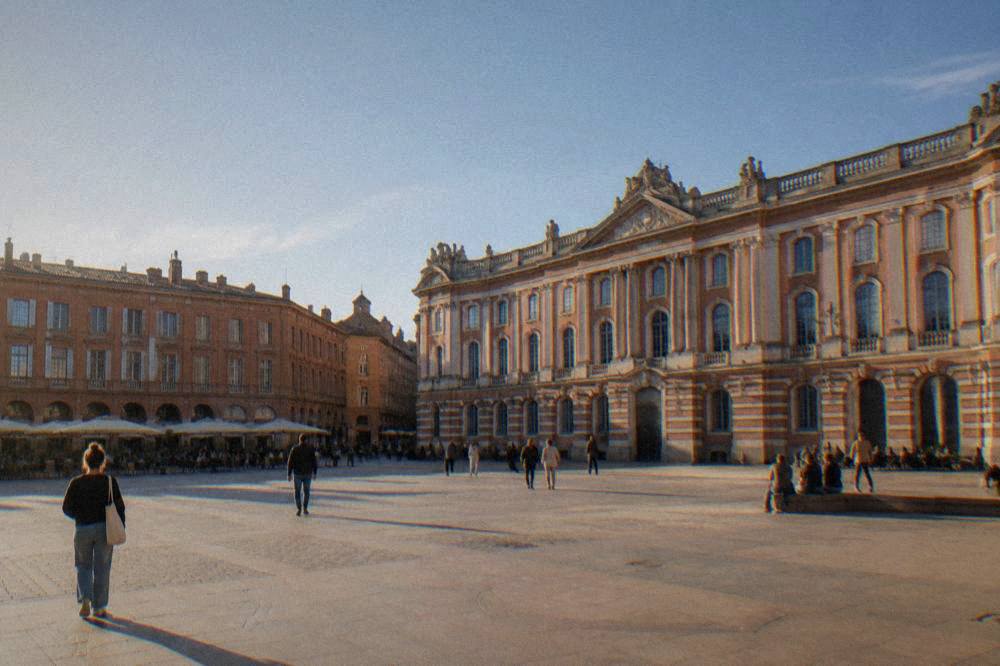
Where English thins out fast is the everyday layer. A market stall at the Marche Victor Hugo, a corner bakery in the Carmes district, a bus driver on the Tisseo network: these run in French. None of it is hostile, and a smile plus "bonjour" opens most doors, but a visitor should not build a plan that assumes fluent English at every counter.
How To Get By With Basic French In Toulouse
Getting by in Toulouse needs far less French than visitors fear: "bonjour", "s'il vous plait", "merci" and a pointed finger cover most shop and market transactions, and the tourist office handles anything complicated in English. The one place to prepare a sentence in French is transport, where drivers and station staff may not speak English, though ticket machines and the Tisseo app remove most of the need to talk at all.
The polite opening is the load-bearing phrase. In France, and very much in Toulouse, walking into a shop and speaking without a greeting reads as rude, while "bonjour" followed by hesitant English reads as normal. Visitors who master only that one word report a different city from those who do not.
For transport, the machines do the talking. The Tisseo network's own fare catalogue lists every ticket a visitor needs, and buying from a machine or the app means no conversation at all.
| Tisseo ticket | Price | Where it helps a non-French speaker |
|---|---|---|
| Single trip | EUR 1.90 | One metro, bus or tram ride, bought from a machine |
| Single trip bought on board | EUR 2.50 | The fallback if the machine is missed, at a premium |
| 10 trips | EUR 16.00 | A stay of several days without repeated purchases |
| Day pass | EUR 7.20 | Unlimited travel for one day |
| 3-day pass | EUR 14.30 | A long weekend; no 2-day pass exists |
| Airport single | EUR 9.50 | Tisseo network plus the Navette aeroport bus |
The airport link deserves its own note, because it is where visitors arrive with the least French and the most luggage. Tram T2 to the airport has been closed since 5 June 2023 and stays closed until the end of 2026 because of the metro Line C works, so the airport bus, the Navette aeroport, is the public transport link: one departure every 15 minutes, 20 to 40 minutes to the center, and the single costs EUR 9.50. The bus takes cashless and card payment at the driver, but the stops are announced in French, so counting minutes or watching a map app is the easier strategy.
A small phrase table earns its place in any pocket:
| French | English | When it matters |
|---|---|---|
| Bonjour | Hello | Entering any shop, always |
| S'il vous plait | Please | Ordering, asking |
| Merci | Thank you | Everywhere |
| L'addition, s'il vous plait | The bill, please | Restaurants |
| Parlez-vous anglais? | Do you speak English? | The honest opener |
| Je ne parle pas francais | I do not speak French | Follows the question above |
Do Guided Tours In Toulouse Run In English?
Yes, the paid guided tours in Toulouse run in English, and for a visitor worried about the language gap they are the most efficient fix available: a live guide handles every interaction, explains every sight in English and removes the phrasebook from the day. The listings state the language of each tour, and the city's tour roster covers walking, bike, bus, boat and food formats, so the choice is about pace and interest, not language.
For a first visit, a guided highlights walk does the most language-proofing per hour. The Toulouse Must-See Highlights with a Guide tour covers the core sights with a live English-speaking guide, which is why this site features it: it converts a day of self-guided guesswork into a narrated circuit. You can read more about the format on our Toulouse walking tours overview, or go straight to the operator's live listing: Check availability.
The free-walk scene deserves a mention here too, because it is a genuine Toulouse strength. GuruWalk lists several free, tip-based walks in the city, including Harry's Free Tour and a two-and-a-half-hour interactive "Rose City" walk. These run in English by design, since their audience is international, and the tip model means no ticket conversation at all. See this free tour on GuruWalk at its own listing page for times and meeting points.
Food tours solve the language problem twice over, since the guide both translates and orders. A guided food tour with tastings takes in the city's cured meats, cheeses and pastries with every interaction handled, and our Toulouse food guide explains what you will actually be tasting. The market at Victor Hugo, the food tour's usual base, is covered in its own Victor Hugo market guide.
What About Day Trips Beyond Toulouse?
Day trips from Toulouse are a mixed picture for English: the organized coach and minibus excursions to Carcassonne, Albi and Cordes-sur-Ciel run with English audio guides or English-speaking guides, while independent travel by train or bus drops you back into French-only territory at stations, ticket counters and rural sights. The organized option costs more and removes the language risk; the independent option is cheaper and needs a bit more French or a lot more patience.
Carcassonne is the classic case. The medieval walled city is a straightforward independent trip, but the on-site guided visits and the Chateau Comtal's interpretive materials lean French, so an organized day trip with an audio guide in English delivers far more of the history. Our Carcassonne day trip guide covers the route options, and the question "Is Carcassonne in France worth visiting?" gets its own full answer elsewhere on this site.
Albi and Cordes-sur-Ciel follow the same logic. The organized day trips supply audio guides in English for both towns, which matters at the Toulouse-Lautrec museum in Albi, where wall texts are predominantly French. If you would rather go independently, our Albi guide and the answers to "Is Albi France worth visiting?" and "What is Albi France famous for?" cover what to expect.
The rule of thumb for planning: the further from Toulouse's tourist circuit, the more French the day needs. A visitor with no French at all should book organized day trips with English commentary and save independent exploring for the city itself, where the tourist office can always help in English.
Common Questions About English In Toulouse
Quick answers to what planners ask most about the language in Toulouse.
Is English widely spoken in Toulouse?
English is reliably available in the tourist-facing layer of the city, meaning hotels, the tourist office, major museums and paid guided tours, but it is not the working language of daily life. Markets, small shops and public transport run in French, and a few polite phrases go a long way.
Can I visit Toulouse without speaking any French?
Yes. Book guided tours in English, buy transport tickets from machines or the app, use the tourist office for anything complicated, and carry "bonjour", "merci" and "parlez-vous anglais?" for the everyday counters. Visitors do this every day without problems.
Are the free walking tours in Toulouse in English?
The free, tip-based walks listed on GuruWalk, including Harry's Free Tour and the interactive Rose City walk, are aimed at international visitors and run in English. The tip model also removes any ticket or booking conversation.
Do Toulouse museums have English information?
The major sights, including the Cite de l'espace and Aeroscopia, publish practical information in English, and the tourist office's materials are in English. Smaller municipal museums lean French in their wall texts, so a guided visit or the Pass Tourisme's free guided tour adds the most context.
Is English enough for day trips from Toulouse?
For organized coach excursions to Carcassonne, Albi and Cordes-sur-Ciel, yes: they include English audio guides or English-speaking guides. For independent trips by train or bus, expect French at stations and in the towns themselves.
The short version: Toulouse rewards a handful of French words, but a visitor who books English-language tours and leans on the tourist office can enjoy the city fully without them.