Does Toulouse Have A Castle?
No, Toulouse has no castle. The pink-brick city on the Garonne in southwestern France offers the Capitole, mansion courtyards and cloisters instead, plus real castles like Carcassonne a day trip away.
Toulouse, the pink-brick city on the Garonne in the Occitanie region of southwestern France, does not have a castle, and no ruler ever built a great fortress at its heart. The city grew rich as a merchant and university town, and its grand buildings are town halls, mansions, churches and cloisters rather than battlements. That said, the question has a longer answer, because the region around Toulouse holds some of the most famous castles in France, and the pink city itself has one building that often gets mistaken for a palace.
Does Toulouse Have A Castle?
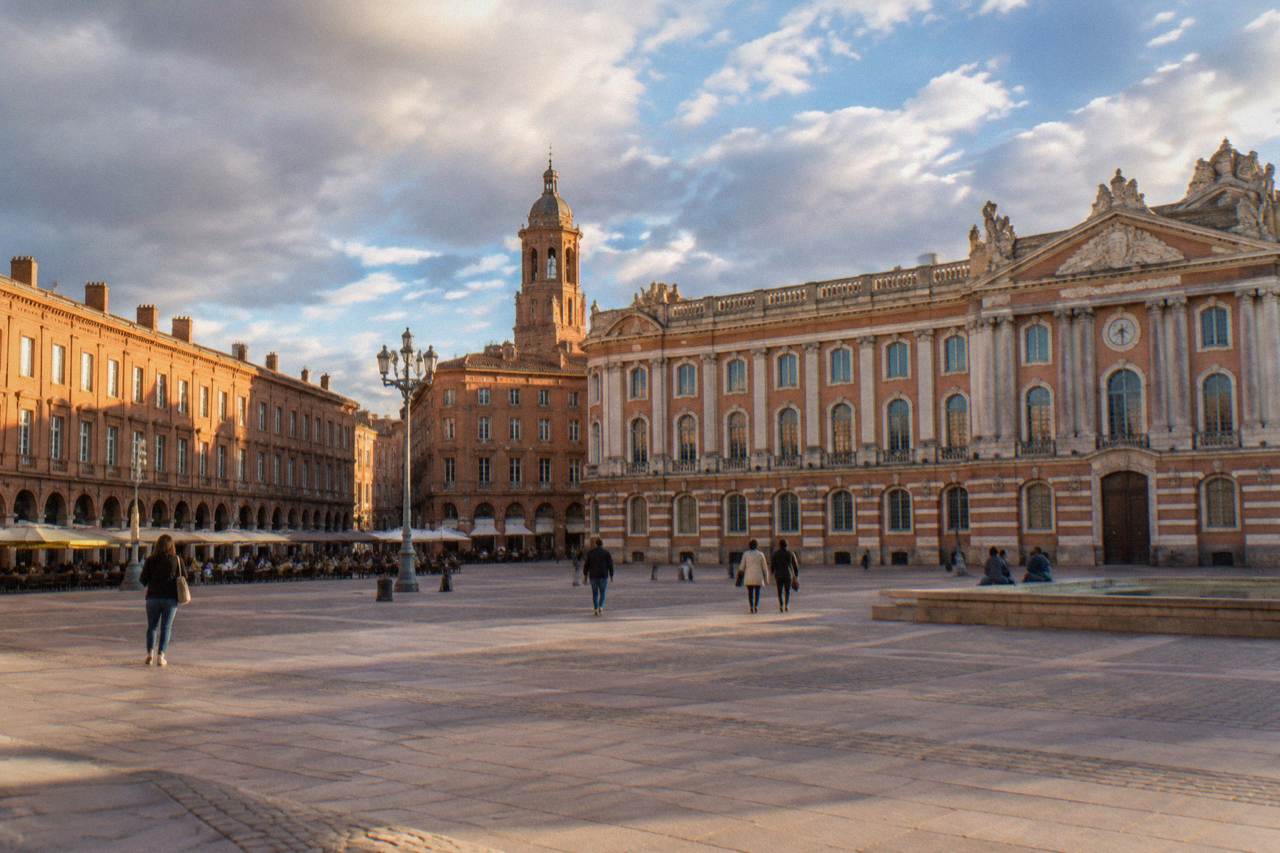
No, Toulouse has no castle. The city that calls itself La Ville Rose, in southwestern France, has no royal fortress, no citadel at its center and no moated chateau in the old town. Its grandest secular building is the Capitole, which houses the city hall and an opera house, and the closest things to a castle are the Renaissance mansions of wealthy pastel merchants.
The absence is not an accident of lost history that needs filling in with legend. Toulouse's wealth came from trade, learning and church power, and the buildings that survive reflect those sources. The Toulouse Travel Guide pages on the Capitole and the basilica of Saint-Sernin cover the two landmarks that actually define the skyline. What a visitor looking for a castle finds instead is a dense old town of rose-colored brick, tower-topped mansions and church spires, strung along the Garonne and the Canal du Midi.
That is worth knowing before you plan, because it changes the itinerary. If castles are the priority, the day trips out of Toulouse deliver them in quantity. If the city itself is the destination, the reward is architecture of a different kind, and the sections below lay out both halves of that trade.
What Toulouse Has Instead Of A Castle
Instead of a castle, Toulouse offers the Capitole, the basilica of Saint-Sernin, the Couvent des Jacobins and a ring of Renaissance merchant mansions with interior courtyards. Saint-Sernin is listed as part of the UNESCO-inscribed Routes of Santiago de Compostela in France, and the Canal du Midi, which touches the city, has been a World Heritage property since 1996.
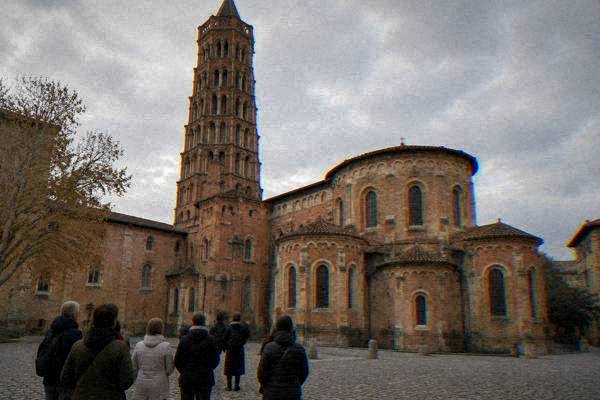
The basilica of Saint-Sernin is the closest thing to a monumental medieval statement that Toulouse possesses. The metropole's page for the basilica records that it is a major stop on the Via Tolosana pilgrimage route and that it has been a listed Monument Historique since 1840. Pilgrimage architecture, not military architecture, is what put Toulouse on the medieval map.
The merchant mansions are the other substitute for a castle. The pastel trade paid for courtyard houses with tall brick towers, and the hotel de Bernuy is one of several that survive in the old streets. They are private or institutional buildings rather than attractions with ticket desks, so the pleasure is in walking past them and into the courtyards that are open, which is one reason a guided walk works well here. The Check availability link for the Toulouse must-see walk, which covers the highlights with a live guide, sits at exactly that decision point, and the three-day Toulouse itinerary shows how to fold them into a longer stay.
The table below lists what the city actually offers in place of a castle, with the admission figures the tourist office and the venues themselves publish. Prices are in euros, the currency used across France, and the free-first-Sunday rule is stated for the Jacobins only, so check each venue's own page before assuming it applies elsewhere.
| Place in Toulouse | What it is | Adult admission |
|---|---|---|
| Capitole | City hall and opera house on the main square | Free to enter the public spaces |
| Basilique Saint-Sernin | Major pilgrimage basilica on the Via Tolosana | Open to visitors |
| Couvent des Jacobins | Gothic convent church and cloister | EUR 5 normal rate, free on the first Sunday of the month except during temporary exhibitions |
| Musee des Augustins | Fine-arts museum in a former convent | EUR 5 normal rate |
| Fondation Bemberg | Art collection in a private mansion | EUR 12 normal rate |
| Les Abattoirs | Modern and contemporary art museum | EUR 12 normal rate |
| Cite de l'espace | Space-themed park with rockets and a planetarium | EUR 29 normal adult rate |
The Capitole: The Closest Thing To A Palace
The Capitole is the building visitors most often mistake for a castle or palace. It is Toulouse's city hall, combined with an opera house, standing on the city's main square since the institution of the Capitouls governed the city, and its tower and long pink-brick facade give the square its name, Place du Capitole.
The building's role explains its look. It was the seat of civic government, not a fortress, so it opens onto the square with arcades and a grand staircase rather than closing itself off with walls and a drawbridge. The Salle des Illustres and the painted interior spaces are the palace-like rooms that reward going inside, and the square in front hosts the Christmas market each winter, from 26 November to 27 December in 2026 according to the metropole's markets page.
For a visitor deciding how to spend a first day, the Capitole works as the anchor of a walking loop: the square, the Rue du Taur leading to Saint-Sernin, and the Garonne a few minutes away. A guided option that strings these together is the Toulouse must-see walk, whose card appears below with its live details.
Where To See A Real Castle Near Toulouse
The real castles near Toulouse sit outside the city, and Carcassonne is the headline: a fully walled medieval citadel about an hour down the valley, reachable by a direct train from Toulouse-Matabiau or by a coach day trip. Beyond it, the Cathar castles of the region, the fortified village of Cordes-sur-Ciel and Rocamadour's clifftop complex give a castle-hungry visitor a full week of options.
Carcassonne answers the castle question so completely that this site keeps a dedicated page for it. The answer on whether Carcassonne is worth visiting covers the citadel in depth, and the page on the famous castle near Toulouse names it directly. Between the two, a reader gets the full picture: what to see, how the day trips run, and what the old counts of the region left behind.
The table below groups the castle-style destinations that work as day trips from Toulouse, without inventing distances or journey times the sources do not give.
| Destination | What you see | Best fit for |
|---|---|---|
| Carcassonne | Walled medieval citadel with towers and ramparts | The classic castle day trip |
| Cordes-sur-Ciel | Hilltop fortified bastide town | A castle-adjacent skyline, paired with Albi |
| Cathar castles region | Ruined mountain fortresses | Hikers and history readers |
| Rocamadour | Clifftop religious and defensive complex | A long day with dramatic views |
Albi, paired with Cordes-sur-Ciel in a popular day trip, brings a fortified cathedral city rather than a castle, and the day trip to Albi and Cordes-sur-Ciel is one of the booked options listed in the picks above. The beautiful towns near Toulouse page rounds out the list for anyone building a multi-day plan.
Do You Need A Castle To Enjoy Toulouse?
You do not. Toulouse's appeal runs through its pink-brick streets, the Garonne riverside, the Canal du Midi, a food scene built around cassoulet and market halls, and an aerospace identity anchored by the Airbus factories and the Aeroscopia museum, which charges EUR 16 adult admission and opens daily from 9:30 to 18:00 with last entry at 17:00.
The aerospace side is the surprise for visitors expecting a purely medieval city. Aeroscopia keeps historic aircraft on display, and the Manatour factory tours take visitors to see the A350 and A321 assembly lines, with an original passport or ID card required and no photocopies accepted. The museum's own practical page notes that the exhibition hall is neither heated nor air-conditioned, which is the kind of detail that matters when planning a visit.
The food side needs no introduction to anyone who has read about the region. The signature dish of Toulouse is cassoulet, and the page on why Toulouse is so famous puts the dish, the pink brick and the planes together in one place. None of it involves a castle, and none of it feels like a gap.
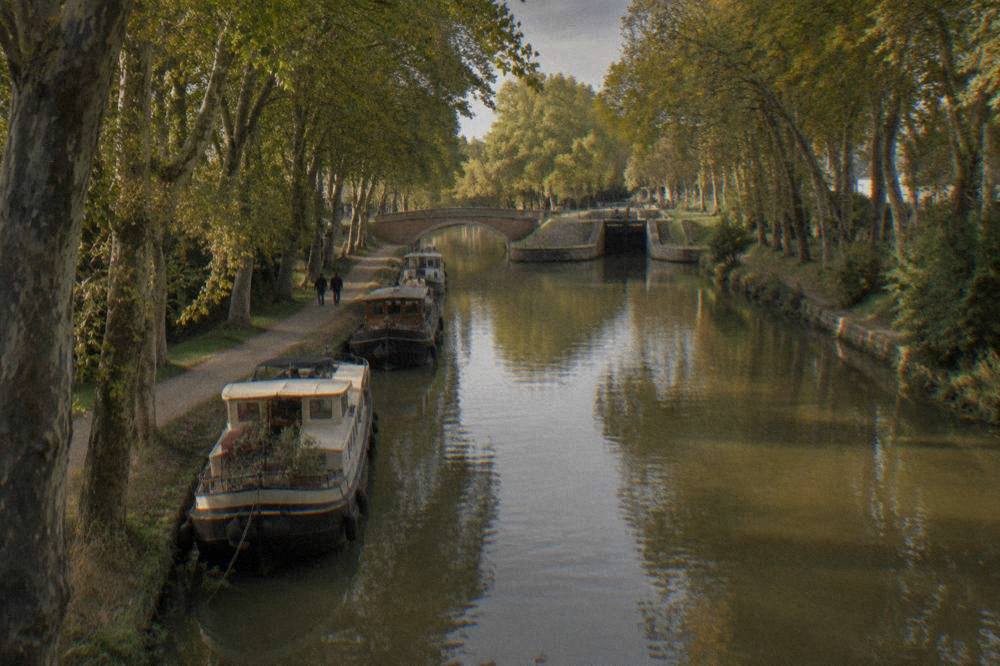
The Canal du Midi deserves its own mention, because it is the city's UNESCO-inscribed asset, listed since 1996. A cruise on the canal, with commentary, is one of the most popular booked experiences in the city, and the best canal trip in France page explains where the Toulouse stretch fits into that question. For a visitor weighing a castle town against Toulouse, the canal, the river and the food halls usually settle it.
Whether the answer is a city break or a castle hunt, the same three products cover the ground well: a guided highlights walk for the pink-brick center, an e-ticket for the Cite de l'espace, and the Albi and Cordes-sur-Ciel day trip for the fortified skyline. The cards below carry the live prices, ratings and availability for each.
Common Questions About Castles In Toulouse
Quick answers to what planners ask most about castles and Toulouse.
Does Toulouse have a castle?
No. Toulouse has no castle, citadel or royal fortress. Its grandest buildings are the Capitole city hall, the basilica of Saint-Sernin, the Couvent des Jacobins and the Renaissance mansions of the old merchant families.
Is the Capitole a castle?
No. The Capitole is the city hall, combined with an opera house, facing the main square. It was built for civic government, so it opens to the square with arcades and grand rooms rather than defensive walls.
What is the closest famous castle to Toulouse?
Carcassonne, a walled medieval citadel reachable by a direct train from Toulouse-Matabiau or by coach day trips booked in the city. It is the region's headline castle and a full day out.
Can you visit a castle as a day trip from Toulouse?
Yes. Carcassonne, the Cathar castle region, Cordes-sur-Ciel and Rocamadour all work as day trips, and several booked options depart from Toulouse with a guide or audio guide included.
Why is Toulouse pink instead of fortified?
Toulouse is known as La Ville Rose for the pink brick of its buildings. The city's wealth came from trade, the church and the university, so its landmark architecture is civic and religious rather than military.
Is Toulouse worth visiting without a castle?
Yes. Between the Capitole, Saint-Sernin, the Canal du Midi, the food scene and the aerospace museums, the city holds a full weekend without a fortress in sight, and the real castles are close by when wanted.