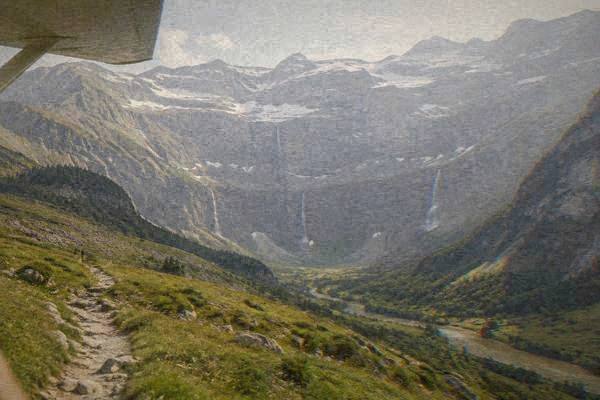
Pau
Pau, in southwestern France, is the hillside city Toulouse visitors reach by direct train when they want mountain views without a long drive. This guide covers the journey, the sights, and the planning.
Short answer
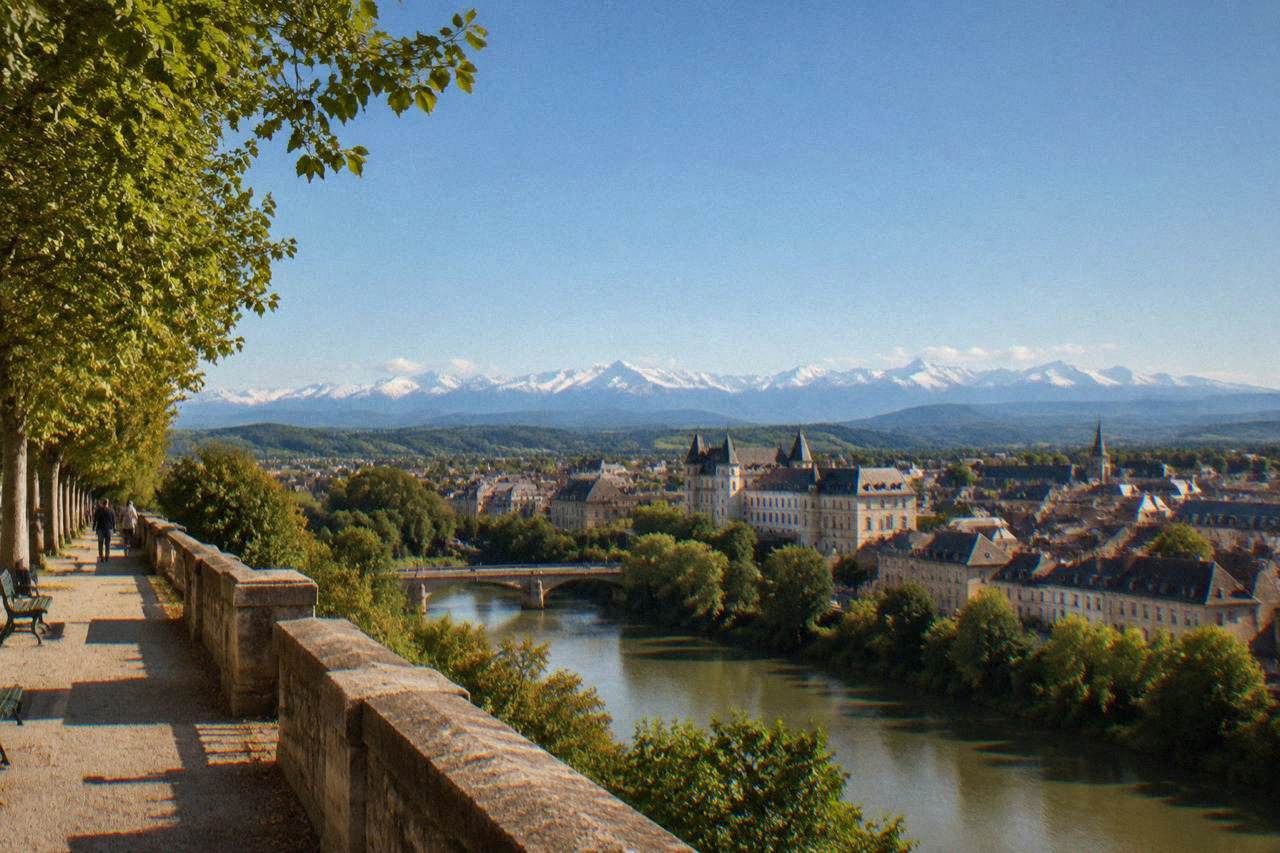
Pau is a hillside city in southwestern France, reached from Toulouse by a direct train from Matabiau station. It is known for its chateau, its elevated boulevard facing the Pyrenees, and its historic center, and it works well as a full-day trip.
Pau sits on a bluff above the Gave de Pau river in southwestern France, facing the Pyrenees, and it is one of the most rewarding day trips you can make from Toulouse. The city is built around a historic chateau, a famous elevated boulevard that looks straight at the mountains, and a compact old center of arcaded streets that you can cover comfortably on foot. This guide from Toulouse Travel Guide covers how to get there, what to see, and what to plan before you leave Toulouse.

Where Is Pau, And Why Do Toulouse Visitors Go There?
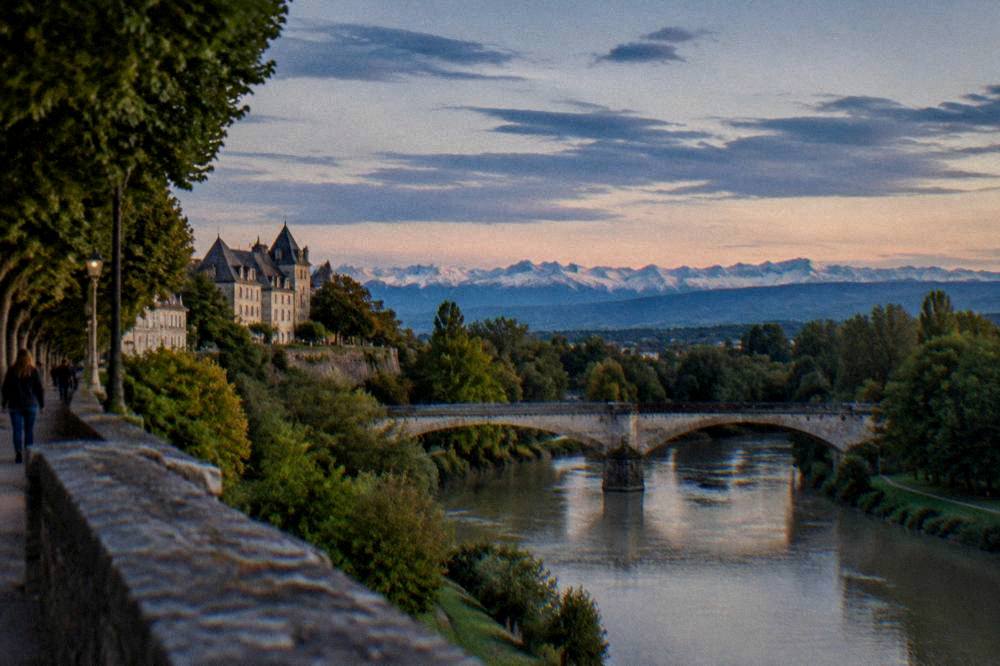
Pau is a city in southwestern France, the seat of the Pyrenees-Atlantiques department, standing on a bluff above the Gave de Pau river with the Pyrenees ranged along its southern horizon. Toulouse visitors go there for the chateau, the mountain-facing Boulevard des Pyrenees, and a walkable historic center, all reachable by a direct train from Toulouse-Matabiau.
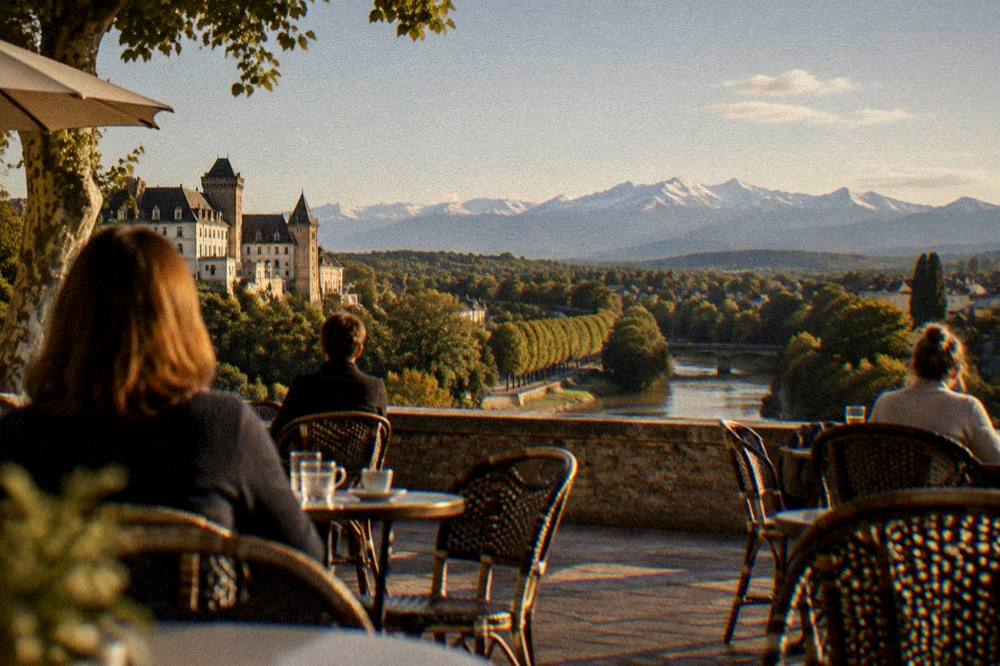
The city's whole layout follows its geography. The old town and the chateau sit high on the bluff; the river runs below it; and the boulevard that runs along the top of the bluff was laid out specifically to put the mountain range on display. On a clear day the view is the single most famous thing about Pau, and it costs nothing. Locals and guides alike treat the weather as the deciding factor: the mountains are not always out, so if your first morning is hazy, it is worth returning to the boulevard later in the day.
Pau also works as a base and a gateway. It faces the Pyrenees the way Toulouse faces the Canal du Midi, as the city's defining backdrop, and it is a natural first stop if you are planning to push on into the mountains. For a wider look at the range from Toulouse, see our Pyrenees day trip guide.
Thinking of pushing on into the mountains from Pau? Book a rental car here.
How Do You Get From Toulouse To Pau?
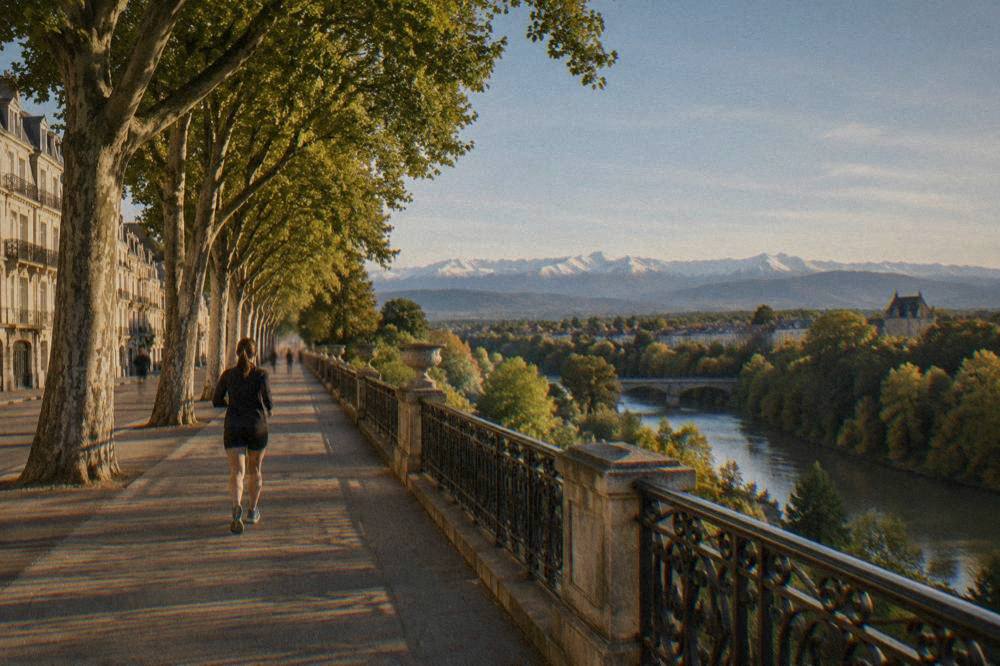
You get from Toulouse to Pau by direct train from Toulouse-Matabiau station, with no changes needed on the main route. There is no verified journey time or fare to quote here, so check the operator's own site for the current timetable and prices. Within Toulouse, a single Tisseo ticket costs EUR 1.90 and covers the metro, tram or bus to the station.
The train is the practical choice. Toulouse-Matabiau is the city's main station, and the Tisseo network feeds it from anywhere in the city: both metro lines and several bus routes serve the station or stop within a short walk. Our Toulouse train station guide covers the layout, the entrances and the surrounding neighborhood in detail, and it is worth reading before a first trip.
Here is what the Tisseo e-boutique catalogue lists for getting around Toulouse on the day you travel:
| Ticket | Price | What it covers |
|---|---|---|
| Single trip | EUR 1.90 | One journey on metro, tram or bus |
| Single bought on board | EUR 2.50 | Same journey, last-minute purchase |
| 10 trips | EUR 16.00 | Ten journeys, shareable |
| Day pass | EUR 7.20 | Unlimited travel for one day |
| 3-day pass | EUR 14.30 | Unlimited travel for three days |
| Airport single | EUR 9.50 | Tisseo network plus the Navette aeroport |
If you are coming from the airport the same morning, the picture is specific: tram T2 to the airport has been closed since 5 June 2023 and stays closed until the end of 2026 because of the Line C metro works, so the Navette aeroport bus is the public-transport link, running one departure every 15 minutes and taking 20 to 40 minutes to the center. The Navette to the Matabiau bus station takes about 25 minutes. Our airport to city center guide walks through the full set of options.
If you would rather not plan the rail leg yourself at all, guided coach day trips from Toulouse are an alternative worth weighing against the train, especially in high summer when advance-purchase rail seats go fast.
The listings above are the operator's own pages, with live prices and current departure dates, and most carry free cancellation up to a day before.
What Are The Best Things To See In Pau?
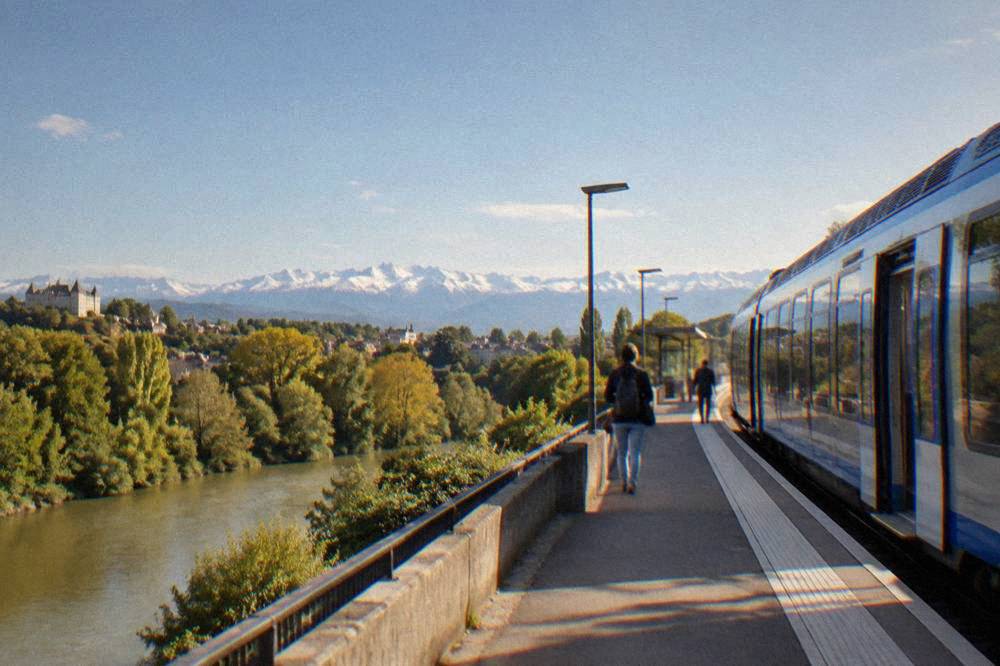
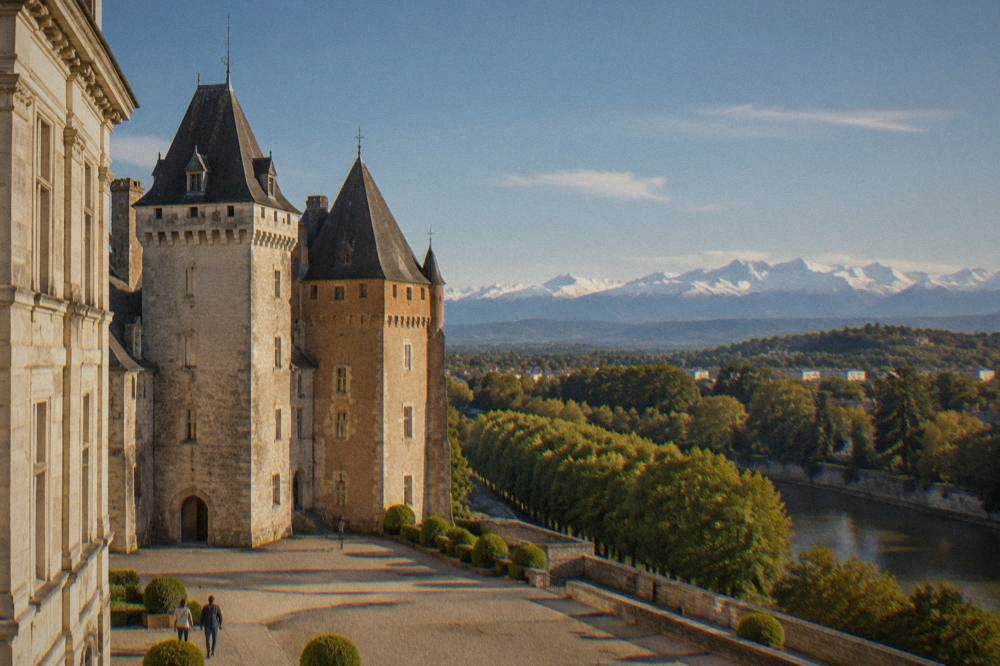
The best things to see in Pau are the Chateau de Pau, the Boulevard des Pyrenees with its mountain panorama, the old center's arcaded streets and squares, and the parkland that slopes from the chateau down toward the river. All of them sit within a compact area you can walk end to end without transport, and the chateau is the anchor of any visit.
Start at the chateau. It is closely associated with King Henri IV, and it dominates the old town; the visit covers the state apartments and the courtyard, and the building's story ties directly into the wider history of the region. From the chateau grounds the park runs downhill toward the Gave de Pau, a green slope with shaded paths that gives you the low-angle view back up at the bluff.
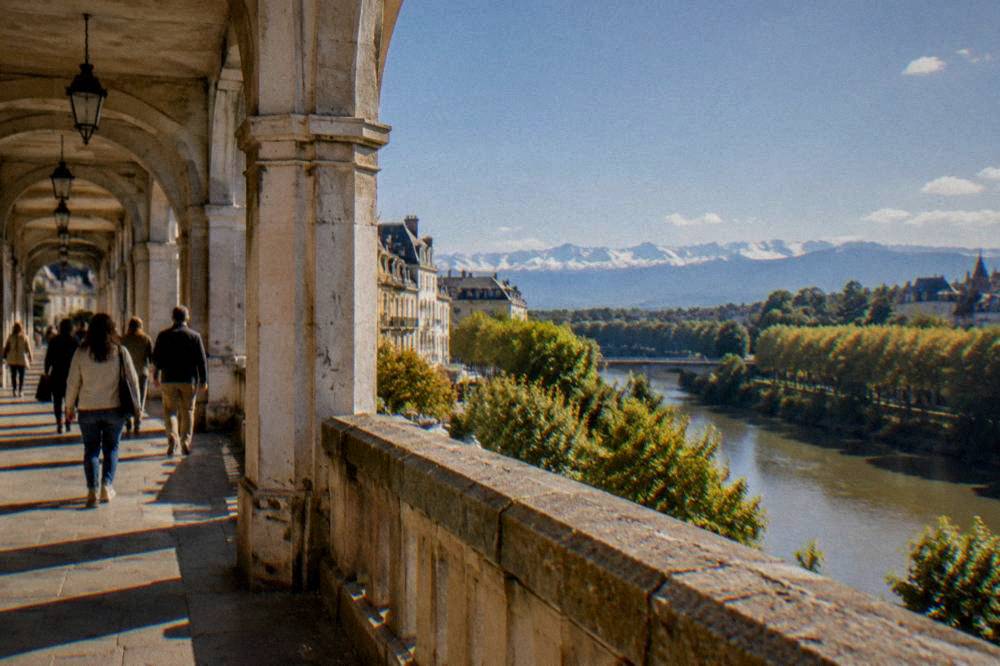
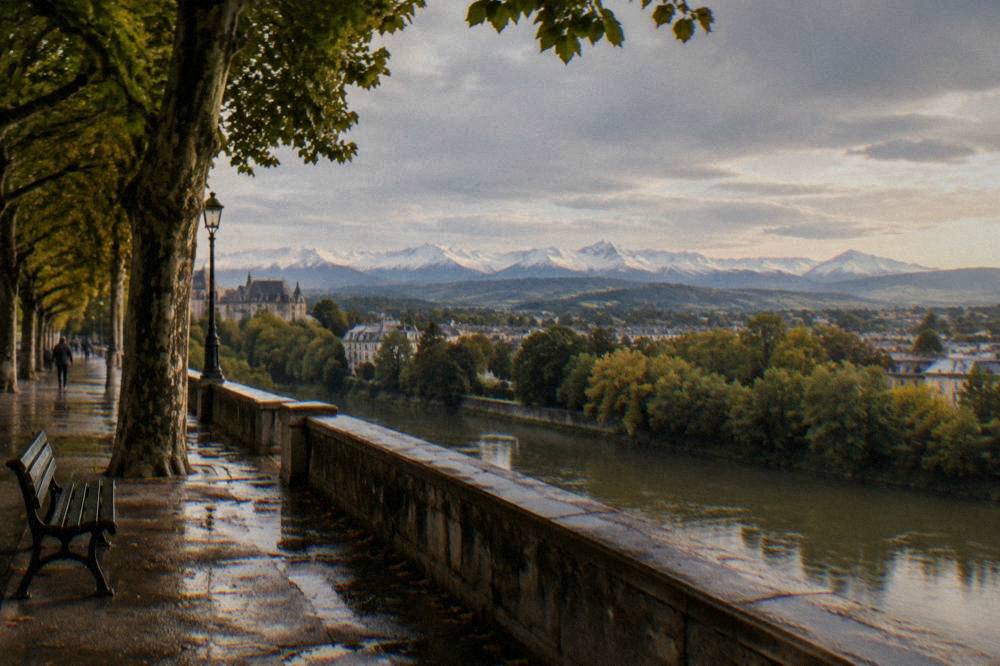
The Boulevard des Pyrenees is the second stop and, for many people, the reason they came. It runs along the top of the bluff from the chateau side toward the funicular and the lower town, and on a clear day the whole range is laid out in front of you. Give it time. The light changes through the day, and the mountains appear and disappear with the haze, so it is worth walking the boulevard more than once if your schedule allows.
After that, the old center: arcaded streets, small squares, and the main shopping streets that run inland from the boulevard. Pau is a city you experience at street level rather than through a list of monuments, and the practical pleasure of the place is that the chateau, the boulevard, the center and the park form one continuous walk.
If you prefer a structured introduction to city walking in general, the guided options below from the Toulouse roster show the format: a local guide, a set route, and the stories behind the facades. The chef-led food and history walk is the most complete version of the idea.
That format transfers well to Pau even though the product itself runs in Toulouse: the value of a guide is in the route and the commentary, and Pau's compact center rewards exactly that kind of structured walk. If a guided day trip out of the city appeals more than an in-city tour, the Albi and Cordes-sur-Ciel coach trip is the site's featured option for that, and the box below summarizes it.
How Much Time Do You Need In Pau?
A full day is the right amount of time for Pau: long enough for the chateau, the boulevard, the old center and a relaxed lunch, without rushing the train back. A half day works if you only want the boulevard, the chateau exterior and a walk through the center, but the mountain views reward waiting, and a hazy morning often clears by early afternoon.
The honest planning advice is to treat Pau as a weather-tolerant day trip rather than a fixed-hour one. The chateau and the old streets are enjoyable in any conditions, but the panorama is the headline, and it is the one element you cannot control. Building slack into the day, arriving mid-morning and leaving in the early evening, gives you two or three chances at a clear view instead of one.
Lunch matters here too. Pau sits in a region with a strong food identity, and the area around it grows the Jurancon vines whose sweet whites have a long historical reputation; the local restaurant scene reflects both. Our Toulouse food guide covers the regional dishes you will find on menus on both sides of the divide, and the Gaillac wine route guide covers the nearer wine country if a vineyard day appeals more than a city one.
If a single day in Pau leaves you wanting more, the surrounding region holds several of the destinations covered elsewhere on this site: Lourdes to the south, the Cathar castles to the east, and the high Pyrenees directly south of the city.
What Does A Sensible Day In Pau Look Like?
A sensible day in Pau runs chateau first, boulevard second, center third: arrive in the late morning, visit the chateau while the light is still building, walk the boulevard and the park in the early afternoon when the haze is most likely to lift, then finish with the old center and an early evening train back to Toulouse.
The order is not arbitrary. The chateau is the one sight with a queue risk and a fixed entry routine, so it goes first. The boulevard and the park are free and always open, so they flex around the weather. The center shops and cafes fill the gaps naturally, and the arcaded streets give you cover if a shower passes through.
Before you leave Toulouse, two pieces of city logistics are worth settling. First, if you plan to pack sightseeing into the days around your trip, the tourist office's Pass Tourisme pays for itself from the third activity: it costs EUR 26 for stays of one to three days and includes a free guided tour from the office, and adding EUR 10 buys ten public-transport trips on the metro, bus and tram network.
| What the Pass Tourisme covers | Normal rate | With the pass |
|---|---|---|
| Fondation Bemberg | EUR 12 | Free |
| Museum de Toulouse | EUR 12 | Free |
| Les Abattoirs | EUR 12 | Free |
| Musee des Augustins | EUR 5 | Free |
| Couvent des Jacobins | EUR 5 | Free |
| Cite de l'espace | EUR 29 | Discounted, not free |
Second, check the museum calendar if your Pau day is near a closure window. The Musee des Augustins is temporarily closed from 21 September to 2 October 2026 for great-closter works, with its Gothic halls reopening on 3 October 2026 from 10:00, and the Couvent des Jacobins is free on the first Sunday of the month except when a temporary exhibition is on. Neither affects Pau itself, but both affect the Toulouse days around it.
When Is The Best Time Of Year To Visit Pau?
The best time to visit Pau is late spring through early autumn, when the mountain panorama is most likely to be clear and the boulevard is pleasant to walk. The Meteo-France 1991-2020 normals for Toulouse-Blagnac, the nearest verified climate record for this trip, show July as the sunniest month at 258.6 hours, with May the wettest at 73.6 mm, so plan around spring showers rather than winter ones.
That last point surprises people. The regional pattern is not a wet-winter, dry-summer one: May averages 73.6 mm of rain, April 65.2 mm and June 64.2 mm, while February gets just 37.2 mm, and the tap turns off into July, which combines the highest sunshine total with only 40.1 mm of rain. The annual picture is 627 mm of rain across 95.8 rain days and 2,075.1 hours of sun.
| Month | Mean temperature | Rainfall |
|---|---|---|
| Jan | 6.3 C | 52.5 mm |
| Feb | 7.1 C | 37.2 mm |
| Mar | 10.3 C | 45.3 mm |
| Apr | 12.7 C | 65.2 mm |
| May | 16.4 C | 73.6 mm |
| Jun | 20.3 C | 64.2 mm |
| Jul | 22.6 C | 40.1 mm |
| Aug | 22.8 C | 44.6 mm |
| Sep | 19.3 C | 45.7 mm |
| Oct | 15.3 C | 54.3 mm |
| Nov | 9.9 C | 55.0 mm |
| Dec | 7.0 C | 49.3 mm |
These figures are the Toulouse-Blagnac station's normals, and Pau, on the Atlantic side of the region, runs its own microclimate, so treat them as regional planning data rather than a Pau forecast. The directional pattern holds either way: the shoulder months of September and October offer warm days, thinning crowds and a good chance of clear mountain air after summer haze.
If you are tying the trip to an event, the verified Toulouse-side dates worth knowing are the Toulouse les Orgues festival from 7 to 18 October 2026, with its opening concert on 7 October at Notre-Dame de la Daurade, and the Christmas markets on Place du Capitole, the allees Jean-Jaures and square Charles-de-Gaulle from 26 November to 27 December 2026.
| Event | Dates | Location |
|---|---|---|
| Piano aux Jacobins | 8 to 30 September 2026 | Couvent des Jacobins, Toulouse |
| Toulouse les Orgues | 7 to 18 October 2026 | Multiple venues, Toulouse |
| Christmas markets | 26 November to 27 December 2026 | Place du Capitole, allees Jean-Jaures, square Charles-de-Gaulle |
| Rio Loco | 9 to 13 June 2027 | Prairie des Filtres, Toulouse |
Where Else Can You Combine With Pau?
The destinations that combine well with Pau are the Pyrenees valleys directly south of it, Lourdes to the south, and the wine and bastide country back toward Toulouse on the return leg. Pau is a gateway city rather than an isolated stop, and the same direct-rail corridor that carries you there continues toward the mountains, so a two-stop day or an overnight extension is realistic.
Lourdes is the obvious pairing, and our Lourdes day trip guide covers it in full. The sanctuary there draws pilgrims year-round, and the town sits in the same mountain corridor, so the two destinations share both scenery and transport logic. If you would rather stay on the cultural side, Auch, the historic capital of Gascony, lies on the eastern side of the region and is covered in our Auch guide.
For travelers who want the mountains themselves, the Pyrenees guide covers the range as a Toulouse day-trip destination in its own right. The range sits roughly 100 km south of Toulouse, and Pau is the natural staging city on the Atlantic side of it, closer to the western valleys than Toulouse is.
Back on the Toulouse side, the classic alternatives to Pau as a day trip are Carcassonne and Albi, and both have full guides on this site: Carcassonne for the walled medieval city, Albi for the brick cathedral and the Toulouse-Lautrec museum. If Pau's appeal is the view, Albi's appeal is the architecture, and the Albi and Cordes-sur-Ciel coach day trip below is the way visitors see both without a car.
Each listing carries its own dates, meeting point and cancellation terms, and the operator's page is the place to confirm them before you commit.
Common Questions About A Pau Day Trip
Quick answers to what planners ask most about Pau.
Can you do Pau as a day trip from Toulouse?
Yes. Pau is a direct train ride from Toulouse-Matabiau, and the city's core sights, the chateau, the Boulevard des Pyrenees and the old center, sit within a walkable area, so a full day there and back is realistic. Check the operator's timetable for the current schedule, as no verified journey time is published here.
What is Pau most famous for?
Pau is most famous for its chateau, closely associated with King Henri IV, and for the Boulevard des Pyrenees, the elevated promenade built to show off the Pyrenees panorama. The view of the mountain range from the boulevard is the city's signature sight.
Do you need a car in Pau?
No. The chateau, the boulevard, the park and the old center form one continuous walking area on and below the bluff, and the station connects to the city without a vehicle. A car only becomes useful if you plan to push into the Pyrenees valleys south of the city on the same day.
How many days do you need in Pau?
One well-planned day covers the chateau, the boulevard, the park and the old center at a relaxed pace. Two days let you add a trip into the nearby Pyrenees valleys or the Jurancon vineyard country, with a second chance at the mountain view if the first day is hazy.
What should you do in Pau if the mountains are hidden?
Spend the day in the chateau and the old center, both of which are unaffected by haze, and return to the Boulevard des Pyrenees later: mountain visibility often improves in the afternoon as morning haze burns off. The parkland below the chateau is a pleasant fallback walk in any weather.
Is Pau worth visiting compared with Carcassonne or Albi?
It depends on what you want. Pau offers the mountain panorama and an elegant boulevard city; Carcassonne offers a complete walled medieval citadel and Albi a brick cathedral and a major painter's museum. All three are covered as separate day-trip guides on this site, and all three are reachable from Toulouse without a car.
Pau rewards the unhurried: a train out of Toulouse in the morning, a chateau before the crowds build, a long look at the mountains from the boulevard, and an evening train back with the Pyrenees behind you. Plan the day around the light, and the city delivers.