What Is The Coldest Month In Toulouse?
January is the coldest month in Toulouse with a mean temperature of 6.3C. Here is what the official climate data says about winter in the pink city, from rainfall to record lows.
Toulouse, the pink-brick city on the Garonne in the Occitanie region of southwestern France, has a winter that surprises people who expect the cold of northern France. The city sits far south, inland, roughly 100 km from the Pyrenees, and its climate is closer to Mediterranean than to Parisian. Meteo-France's 1991-2020 climate normals for the Toulouse-Blagnac station give a precise answer to the coldest-month question, and the numbers point firmly at one month: January.
What Is The Coldest Month In Toulouse?
January is the coldest month in Toulouse, with a mean temperature of 6.3C, a mean daily maximum of 9.7C and a mean nightly minimum of 2.9C, according to Meteo-France's 1991-2020 climate normals for the Toulouse-Blagnac station. December and February sit just behind it, at 7.0C and 7.1C mean respectively.
Those three months form the core of the Toulouse winter, and the gap between them is small. January earns the coldest-month title on every measure the normals record: it has the lowest mean maximum, the lowest mean minimum, and the least sunshine of the year at 89.1 hours. December is a close second for gloom, at 89.7 hours of sun, which is why late December days feel short even when the thermometer is not especially harsh.
The nights are where the cold concentrates. A January night in Toulouse averages just above freezing, at 2.9C, and frost is a regular feature of clear winter nights. The days, by contrast, often reach around 10C under a pale sun, which makes walking the city center pleasant enough with a decent coat. This day-night spread is characteristic of an inland city: Toulouse has no ocean nearby to buffer its temperatures, so it cools quickly after sunset and warms steadily through the morning.
For trip planning, the practical takeaway is simple. January is cold by southern French standards but rarely brutal, and it is the cheapest and quietest month to visit. If your dates are flexible and you want the mildest possible winter city break, any month from March onward is warmer, but February is only fractionally milder than January, so it is not worth shifting a trip by a few weeks for the temperature alone.
| Month | Mean temp (C) | Mean daily max (C) | Mean nightly min (C) | Sunshine (hours) |
|---|---|---|---|---|
| December | 7.0 | 10.4 | 3.6 | 89.7 |
| January | 6.3 | 9.7 | 2.9 | 89.1 |
| February | 7.1 | 11.2 | 3.1 | 118.2 |
How Cold Does Toulouse Get At Its Extreme?
The coldest temperature ever recorded at the Toulouse-Blagnac station is -19.2C, on 15 February 1956, a figure from Meteo-France's record series covering 1947 to June 2025. That is an outlier: a typical January night averages 2.9C, and days above 10C happen regularly through all three winter months.
The 1956 record is worth knowing for perspective rather than for packing. It dates from an exceptional cold wave, and nothing close to it appears in the modern record. The more recent record the same series holds is the opposite: 42.4C on 23 August 2023, the hottest day ever logged at the station. Toulouse's climate swings between those two extremes because it is inland, with no sea to moderate either heatwaves or cold snaps.
What a winter visitor should actually expect is a narrow, manageable band. Daytime highs in the coldest month average 9.7C, and the normals show zero days per year reaching 30C from November through March. Nights dip toward freezing, mornings can carry frost on parked cars and garden railings, and the pink brick of the old city takes on a muted tone under the low sun. Snow is not part of the verified climate record for the city, so this page makes no promise about it either way: the normals track temperature, rain and sunshine, and the rain figures are what define a Toulouse winter.
The wind-chill question comes up often, and the honest answer is that the normals do not measure it. What they do show is that January combines the year's lowest temperatures with the year's least sunshine, so the cold feels more persistent than the raw numbers suggest. Layers, a proper jacket and a scarf cover the January case entirely.
Does It Rain More In Winter In Toulouse?
No. The official normals show May is the wettest month in Toulouse, at 73.6 mm of rain, with April at 65.2 mm and June at 64.2 mm close behind. The winter months are middling: January averages 52.5 mm, December 49.3 mm, and February is the driest month of the whole year at 37.2 mm.
This is the fact that most often contradicts what visitors assume. People expect a southern French winter to be the rainy season, and the data says the opposite: late spring carries the rain in Toulouse, and by July the tap nearly closes, with just 40.1 mm across the month. Winter rain in Toulouse is frequent in the sense that there are rain days, with January averaging 9.2 days of at least 1 mm, but the amounts per event are modest.
| Month | Rain (mm) | Rain days (>= 1 mm) | Sunshine (hours) |
|---|---|---|---|
| January | 52.5 | 9.2 | 89.1 |
| February | 37.2 | 7.8 | 118.2 |
| May | 73.6 | 9.9 | 212.3 |
| July | 40.1 | 5.7 | 258.6 |
For a January visit, that means planning for damp, grey stretches rather than downpours. An umbrella is a reasonable precaution; waterproof boots are overkill. The rain days cluster with the low sunshine, so the practical winter pattern is a morning of light rain followed by an afternoon that clears, though the normals describe averages, not any individual week.
The contrast with the hot months is covered in detail on the hottest month in Toulouse page, and the rainfall pattern across the whole year on does it rain a lot in Toulouse. Between them they give the complete picture of what the Meteo-France normals record for the city.
Is January A Good Month To Visit Toulouse?
January can be a good month to visit Toulouse if you want low crowds and low prices and you accept short, cool days, with the coldest-month averages of 9.7C daytime highs and 89.1 hours of sunshine. The city's indoor attractions, from museums to the Aeroscopia aviation museum, are unaffected by the season.
The case for January is practical. It sits outside every school holiday and every festival peak, hotel demand in the city is at its lowest, and the tourist office's Pass Tourisme, at EUR 26 for stays of one to three days, covers the municipal museums that make a cold day rewarding: the tourist office's Pass Tourisme page lists the Musee des Augustins at a normal rate of EUR 5 and the Couvent des Jacobins at EUR 5, both free with the pass. The Jacobins is also free on the first Sunday of the month, except when a temporary exhibition is on. The wider set of guides lives on Toulouse Travel Guide.
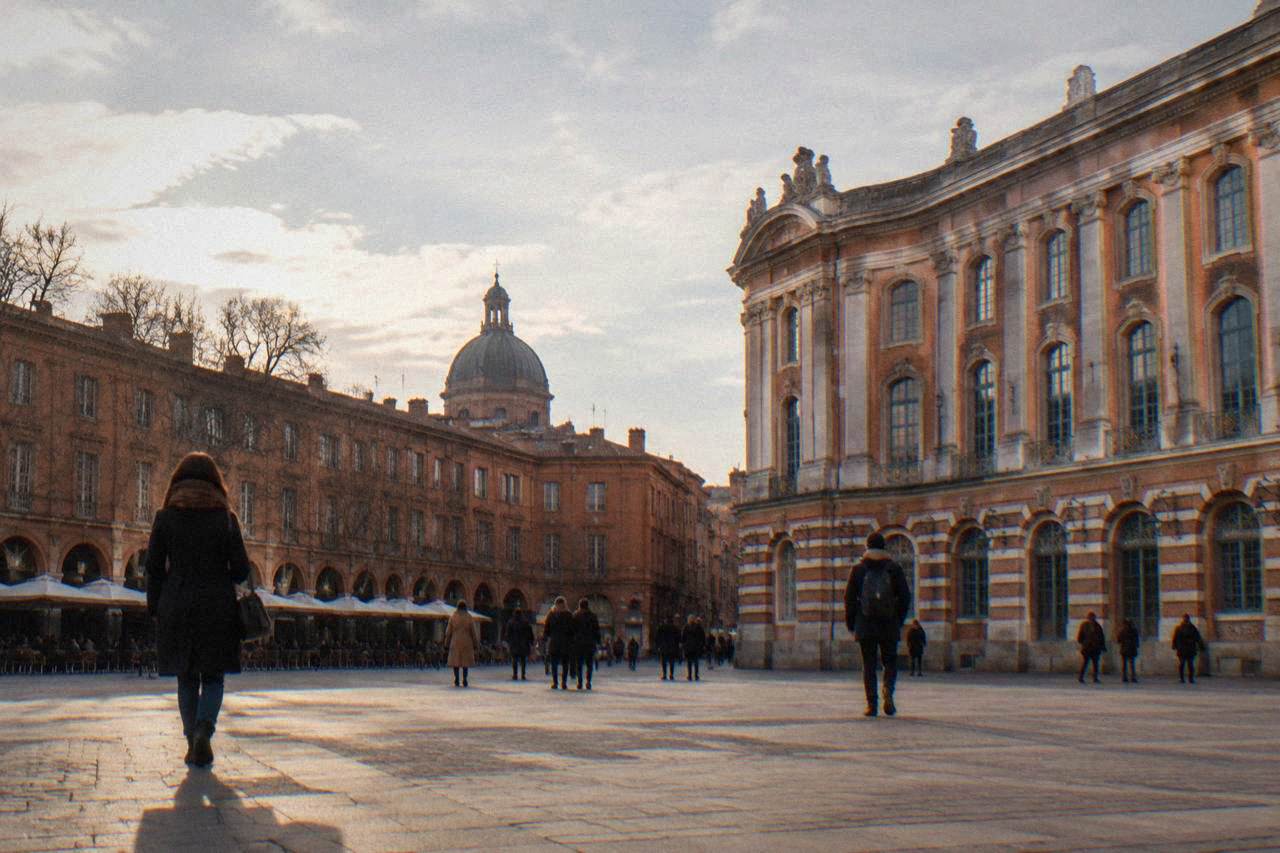
The case against is the light. With 89.1 hours of sunshine, January is the dullest month of the year in Toulouse, and the days are short. Photographers who want the pink brick glowing should know the low winter sun can actually flatter the facades, but the window for it is narrow. If your trip is built around long outdoor days, how many days is enough for Toulouse planning matters more in winter, because each daylight hour counts.
One planning note for late 2026 and 2027: the Musee des Augustins is temporarily closed from 21 September to 2 October 2026 for great-closter works, and its Gothic halls reopen on 3 October 2026 from 10:00, so a January 2027 visit catches the museum in its reopened configuration. The Couvent des Jacobins has roof restoration under way with the site staying open to visitors, with the end of works planned for summer 2026.
What Should You Pack For The Coldest Month?
Pack for a mean January of 6.3C: a proper winter coat, layers for the 2.9C nights and mornings, and something for light rain, since the month averages 52.5 mm across 9.2 rain days. You will not need serious cold-weather gear, because the record low of -19.2C dates from 1956 and modern winters sit far above it.
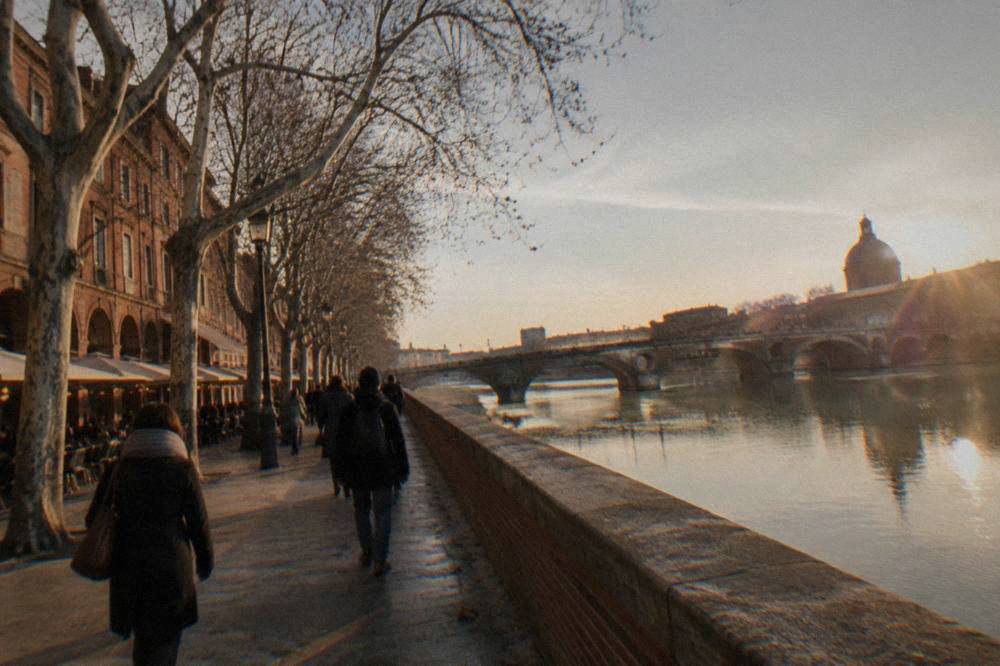
The packing logic follows the day-night spread. A day that starts at 2.9C can reach 9.7C by early afternoon, so removable layers beat one heavy garment. A scarf and gloves earn their place for evenings along the Garonne, where the riverside walks are exposed and the January air feels sharper than the sheltered old streets. Comfortable waterproof-ish shoes handle the damp pavement after the frequent light rain.
The one thing not to over-pack for is heat: the normals show zero days at or above 30C from November through March, and January's mean maximum of 9.7C means a warm sweater under the coat is the right ceiling. If your trip spans late December into January, the difference is negligible, since December's mean of 7.0C and January's 6.3C are separated by less than a degree.
Winter is also a season for the city's covered and indoor pleasures, and this is where a self-guided option earns its keep. The Discover Toulouse: Self-Guided Audio Tour of the Pink City lets you set your own pace between warm stops, and it pairs naturally with a cafe break whenever the temperature or the drizzle argues for one.
The same logic applies to the city's bigger indoor draws. Aeroscopia's exhibition hall is open daily and, notably, not heated or air-conditioned, so the aviation museum is a winter-proof stop in the sense that weather never closes it, though a coat stays on indoors too.
Looking for an indoor stop that suits a cool January day? Book an Aeroscopia admission ticket here.
How Does Toulouse Winter Compare With The Rest Of France?
Toulouse's coldest month, January at a mean of 6.3C, is mild for France as a whole, because the city sits far south and inland, where Mediterranean influence softens the winters. The verified normals for Toulouse-Blagnac show no figure below a 2.9C monthly mean minimum, while the national cold records concentrate in the north, the east and the mountains.
This page sticks to what the Meteo-France fiche for Toulouse-Blagnac actually records, and it records a southern city. The station sits at 151 m of altitude, the annual mean maximum is 18.8C and the annual mean minimum 9.6C, which frames January's 9.7C and 2.9C as the low end of a warm profile rather than an outlier. The 2,075.1 hours of annual sunshine put Toulouse among the sunnier French cities, even though January itself is its dullest month.
The comparison visitors usually care about is with Paris, and the honest framing is directional rather than numerical: the same southerly position that gives Toulouse its July heat, 258.6 hours of sunshine and only 11.5 days a year above 30C, also keeps its winters short of the harsher cold found in the north of the country. No verified Paris figure appears in the Toulouse climate record, so none is invented here.
Within the region, the Pyrenees roughly 100 km south are a different climate zone entirely, and any mountain snow content belongs to day-trip planning rather than to the city's own winter. For the city itself, the numbers above are the complete picture: January is the coldest month, February is the driest, and spring, not winter, is the wet season.
Common Questions About The Coldest Month In Toulouse
Quick answers to what planners ask most about Toulouse winters.
What is the coldest month in Toulouse?
January is the coldest month in Toulouse, with a mean temperature of 6.3C, a mean daily maximum of 9.7C and a mean nightly minimum of 2.9C, per the Meteo-France 1991-2020 normals for the Toulouse-Blagnac station.
Does it freeze in Toulouse in winter?
January nights average 2.9C, just above freezing, so frost is common on clear nights but sustained hard freezes are not part of the modern record. The all-time record low of -19.2C was set on 15 February 1956.
Is February warmer than January in Toulouse?
Yes, slightly. February's mean is 7.1C against January's 6.3C, and February also gets more sunshine, 118.2 hours against 89.1. February is also the driest month of the year at 37.2 mm of rain.
Is winter the rainiest season in Toulouse?
No. May is the wettest month at 73.6 mm, followed by April at 65.2 mm and June at 64.2 mm. January averages 52.5 mm and February just 37.2 mm, so winter is not the wet season.
Is January too cold for walking around Toulouse?
Not usually. Daytime highs average 9.7C in January, and the compact old center is walkable with a winter coat. Planning indoor stops like the municipal museums between outdoor stretches makes the short days comfortable.
How much sunshine does Toulouse get in winter?
January gets 89.1 hours of sunshine and December 89.7, the two dullest months of the year. February improves to 118.2 hours, and by March the city is back to 175.3 hours.